
CFA Level 2 Prep Course & Study Materials
Select the CFA® Level 2 Prep Course That Matches Your Approach
Whether you need focused CFA Level 2 exam prep essentials or a full-spectrum review course with live expert access, we have the right package for how you study.
eBook Only
eBook Only
eBook + Printed Book Set
1 (Mock A)
3 (Mocks A, B, C)
*Total questions dependent on package selected
| Practice with questions written by finance experts to reflect the most current CFA Level 2 Exam in difficulty and format. 1,150+ Vignette-Based Questions in our QBank and more available in our mock exams. | ||
|
||
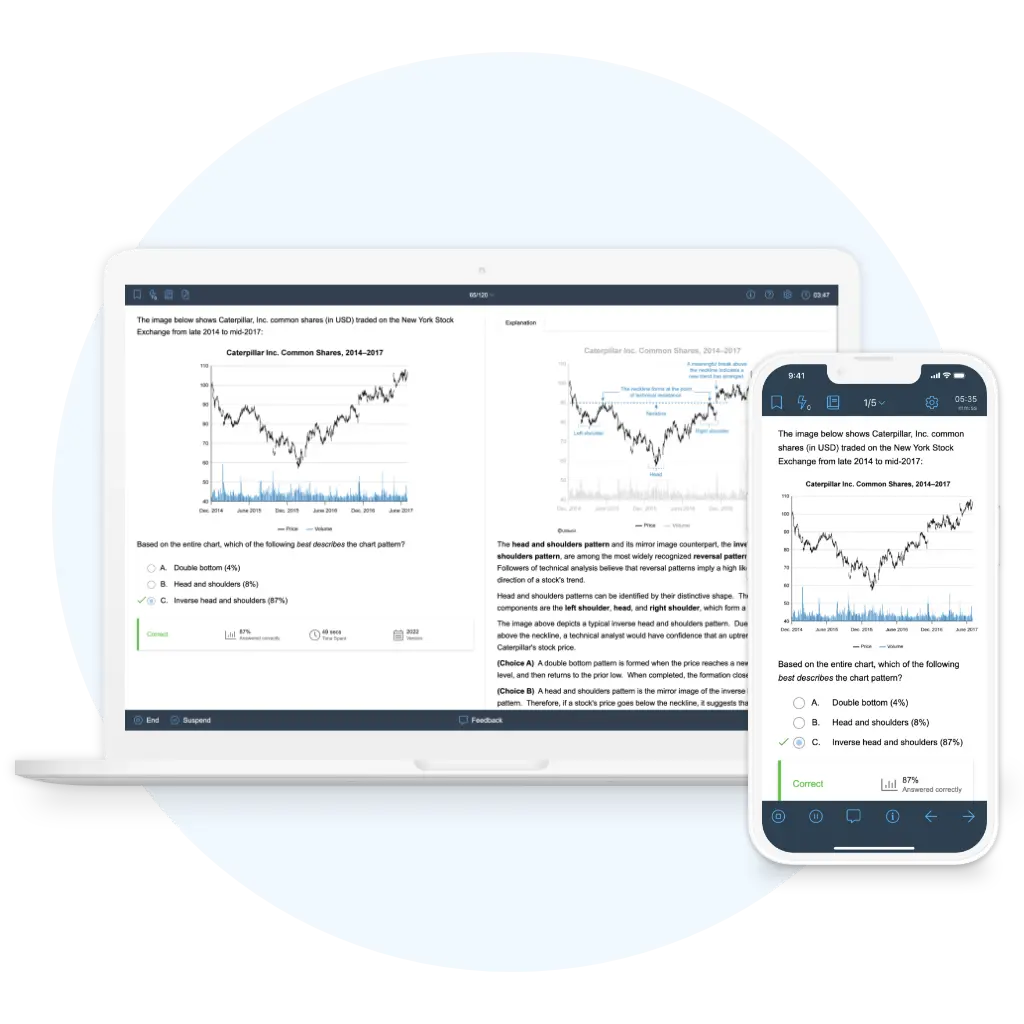
| Monitor your progress, identify weak areas, and optimize your prep using detailed performance analytics. | ||
| Take your CFA prep on the go with full access to all study materials via the UWorld Finance - Exam Prep mobile app. | ||
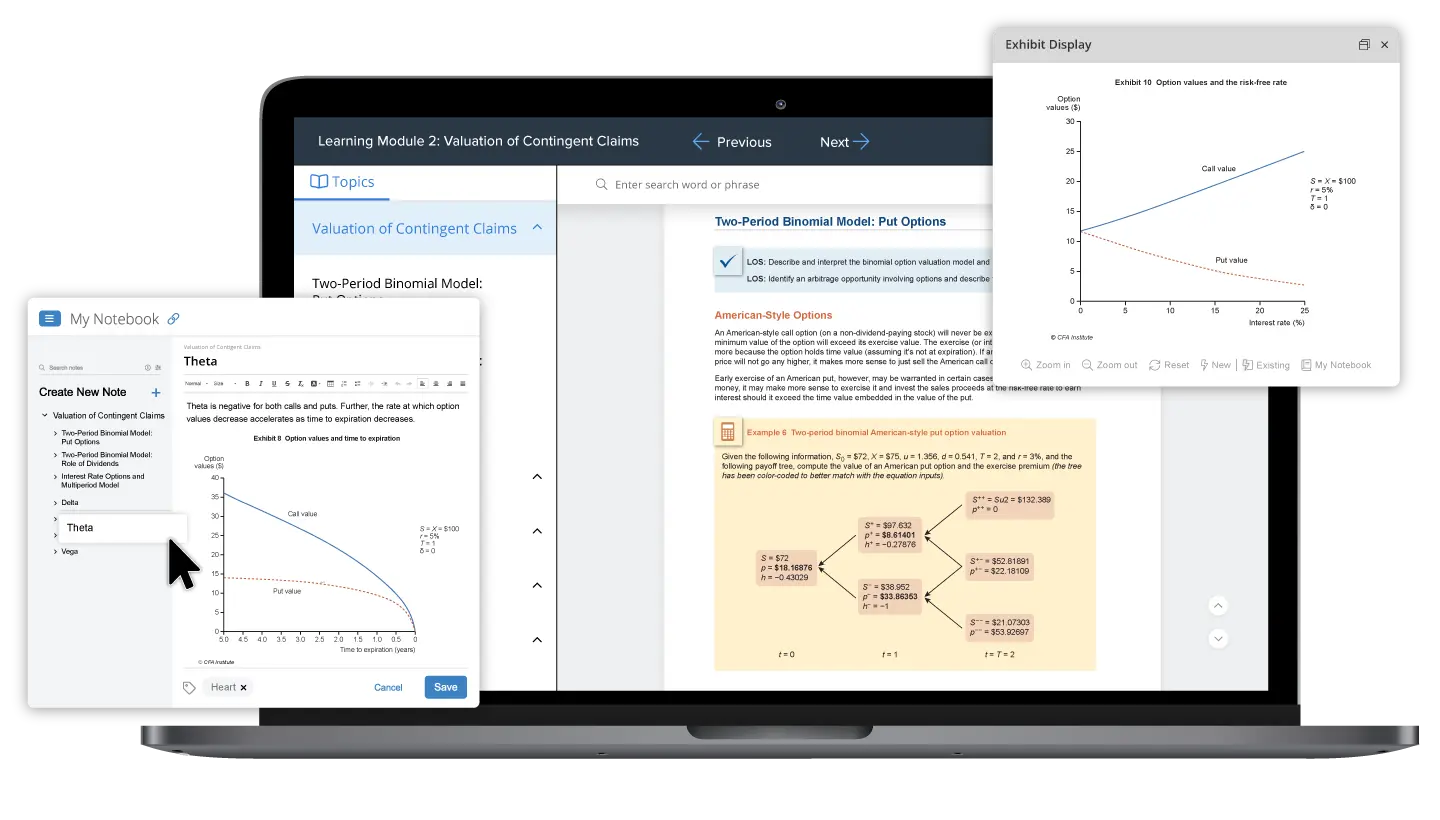
| Save key content, take notes, and build a personalized digital study guide as you learn. | ||
| Get tutor-like guidance that provides instant answers trained by our experts. |
| Practice with questions written by finance experts to reflect the most current CFA Level 2 Exam in difficulty and format. 1,150+ Vignette-Based Questions in our QBank and more available in our mock exams. | ||
|
||
| Monitor your progress, identify weak areas, and optimize your prep using detailed performance analytics. | ||
| Take your CFA prep on the go with full access to all study materials via the UWorld Finance - Exam Prep mobile app. | ||
| Save key content, take notes, and build a personalized digital study guide as you learn. | ||
| Get tutor-like guidance that provides instant answers trained by our experts. | ||
| Create a personalized study plan aligned to your test date and progress, helping you stay on track. | ||
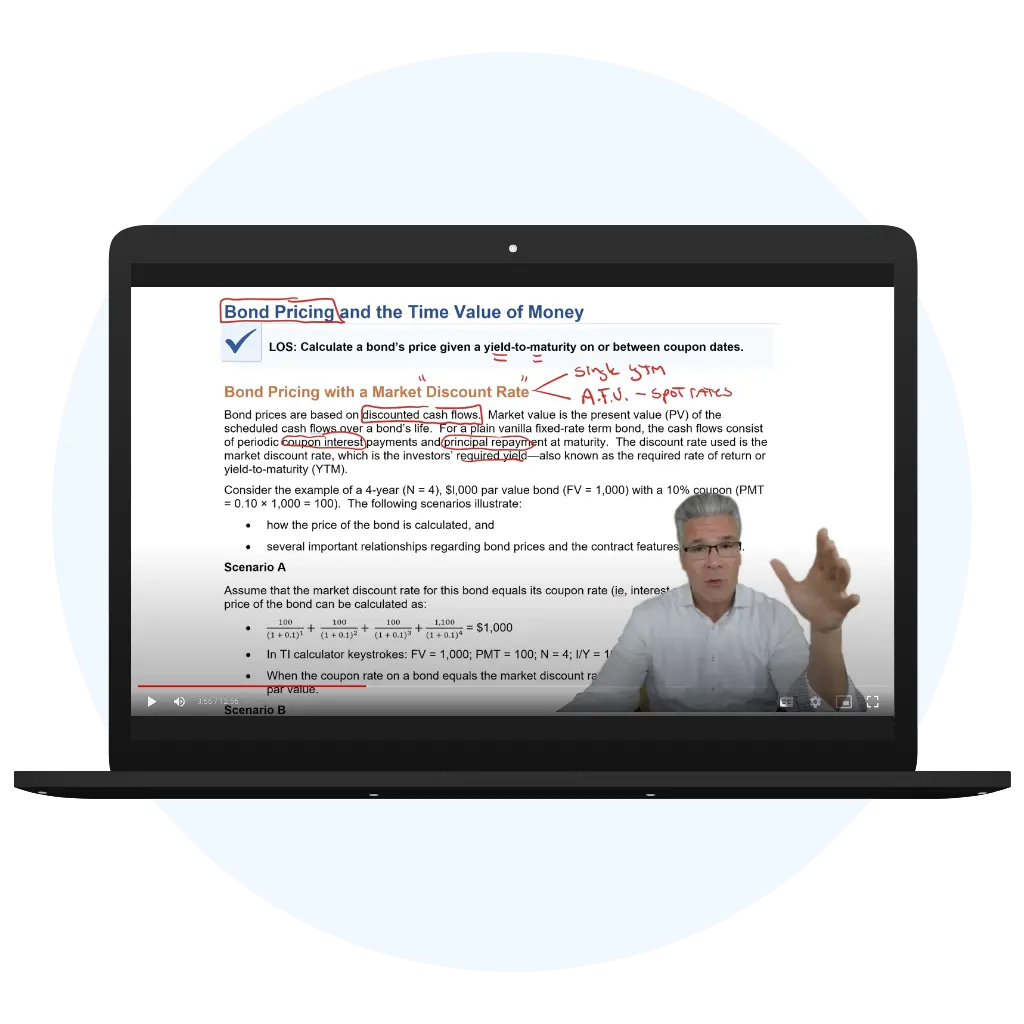
| Get additional context and depth with bite-sized review videos that hone in on learning outcome statements. | ||
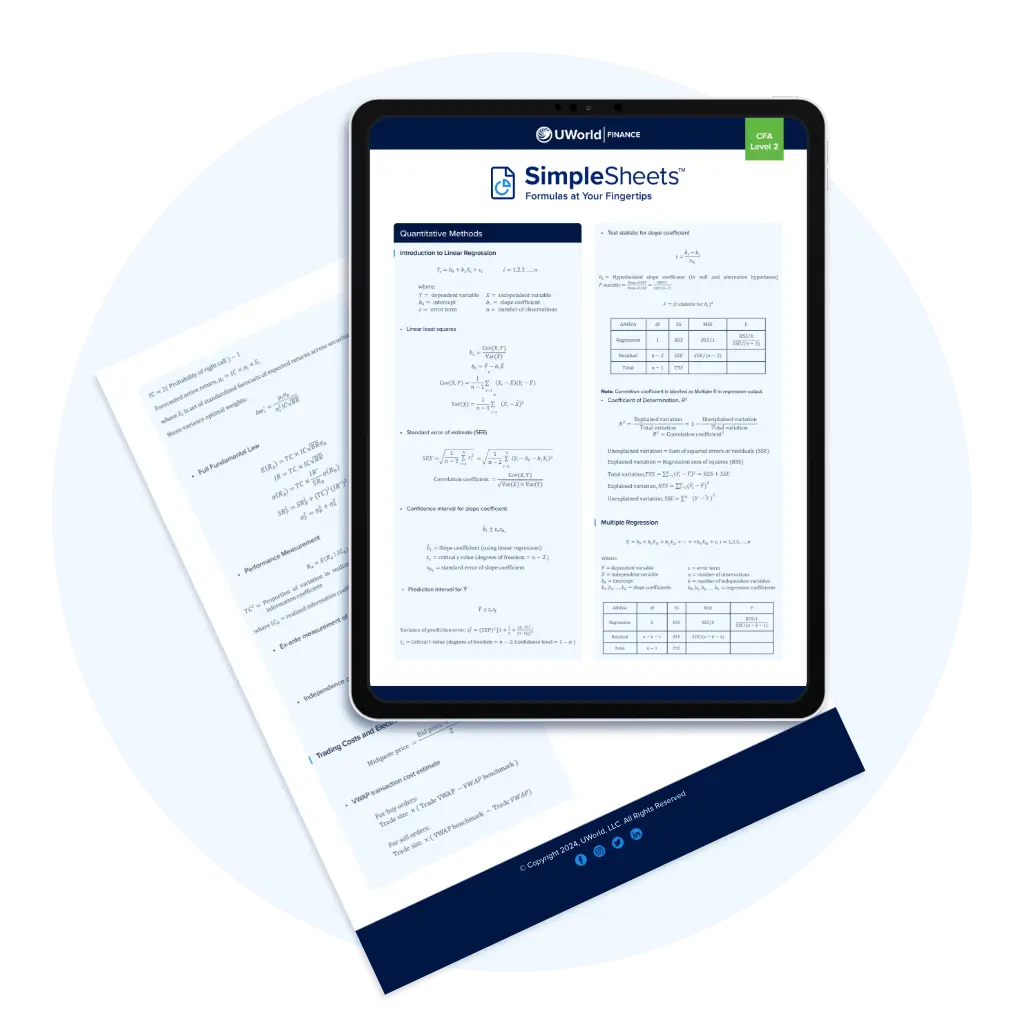
| Reference an outline of key formulas, definitions, and must-know concepts in a streamlined format for quick review. | ||
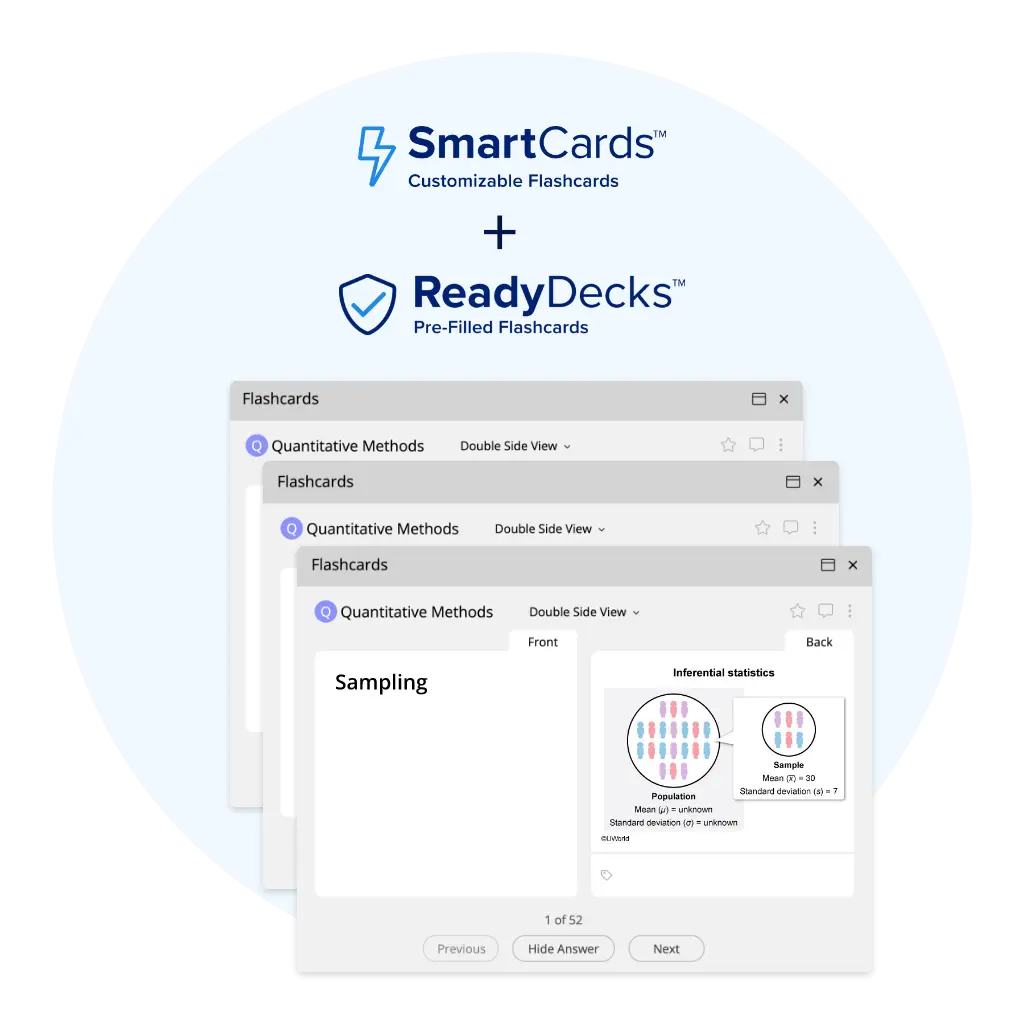
| Create your own flashcards to reinforce key concepts, formulas, and definitions. Organize them by subject, topic, or custom tags. Study your personalized deck anytime, anywhere across devices. | ||
| Study with preloaded, expert-curated flashcards organized by subject, topic, or custom tag. | ||
|
| Practice with questions written by finance experts to reflect the most current CFA Level 2 Exam in difficulty and format. 1,150+ Vignette-Based Questions in our QBank and more available in our mock exams. | ||
|
||
| Monitor your progress, identify weak areas, and optimize your prep using detailed performance analytics. | ||
| Take your CFA prep on the go with full access to all study materials via the UWorld Finance - Exam Prep mobile app. | ||
| Save key content, take notes, and build a personalized digital study guide as you learn. | ||
| Get tutor-like guidance that provides instant answers trained by our experts. | ||
| Create a personalized study plan aligned to your test date and progress, helping you stay on track. | ||
| Get additional context and depth with bite-sized review videos that hone in on learning outcome statements. | ||
| Reference an outline of key formulas, definitions, and must-know concepts in a streamlined format for quick review. | ||
| Create your own flashcards to reinforce key concepts, formulas, and definitions. Organize them by subject, topic, or custom tags. Study your personalized deck anytime, anywhere across devices. | ||
| Study with preloaded, expert-curated flashcards organized by subject, topic, or custom tag. | ||
|
||
| Request a free course extension if you don’t pass the CFA Exam on your first try, giving you more time to succeed. | ||
| Turn practice into power with a 2-day, high-yield problem-solving experience designed to transform your prep and elevate your CFA Exam readiness. | ||
| Tackle your most challenging CFA questions live in real-time Q&A sessions. Get direct answers from experts when it matters most. | ||
| The TotalPrep Series is a 3-phase learning program designed to help CFA candidates maximize their exam performance. It includes Expert MasterClass, Accelerate BootCamp, and Live Q&A, each focused on different parts of the prep journey from core concept review to last-minute support. |
*Total questions dependent on package selected
How UWorld's CFA Level 2 Exam Prep Builds Mastery
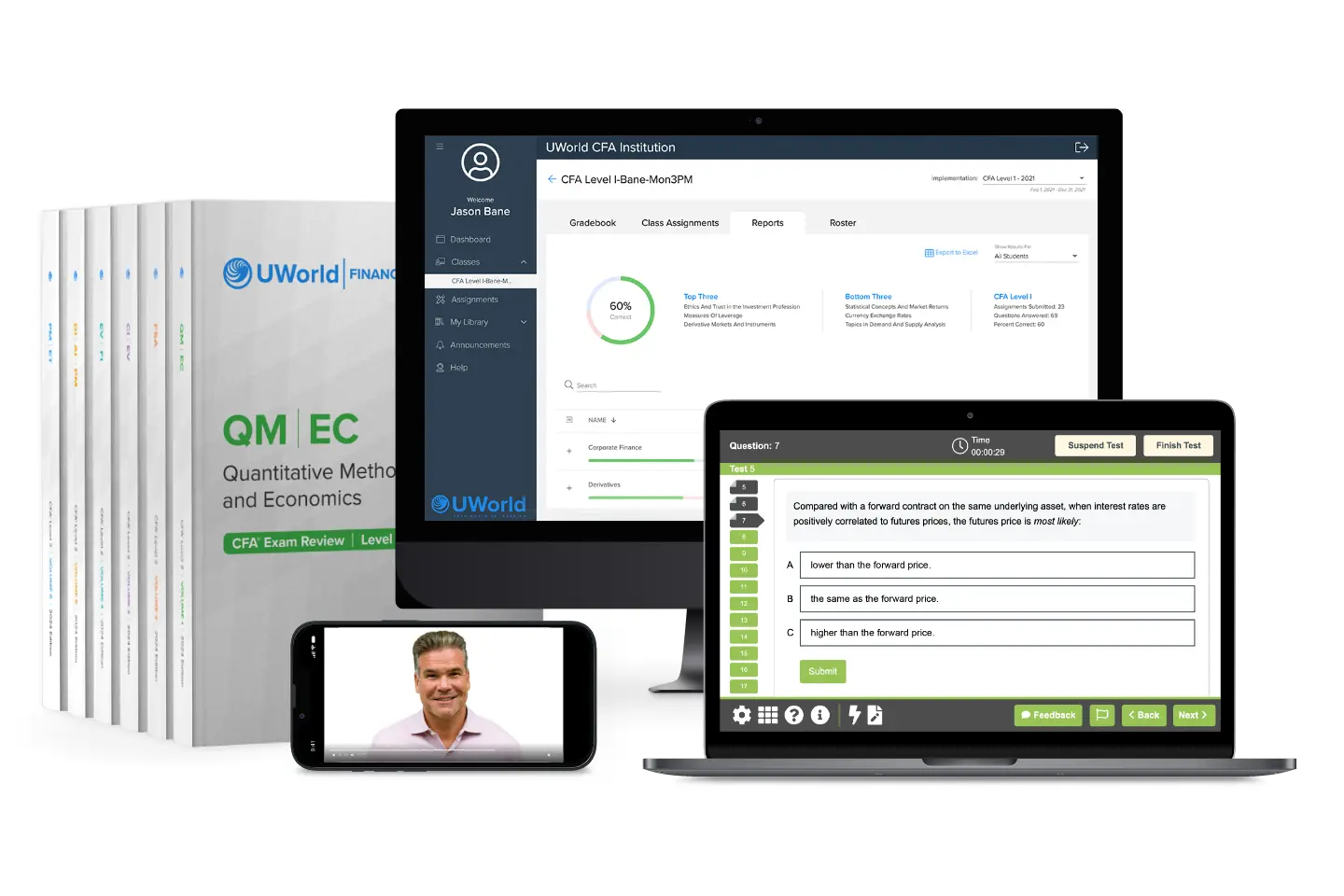
UWorld’s all-in-one CFA Level 2 Exam Prep Course & Study Materials doesn’t just help you study - it trains you to think like a CFA charterholder. Our integrated system combines expert-led videos, concise study guides, exam-level practice, and realistic mock exams so you walk into test day fully prepared and confident.
1 Watch
Valuation-Focused Video Instruction
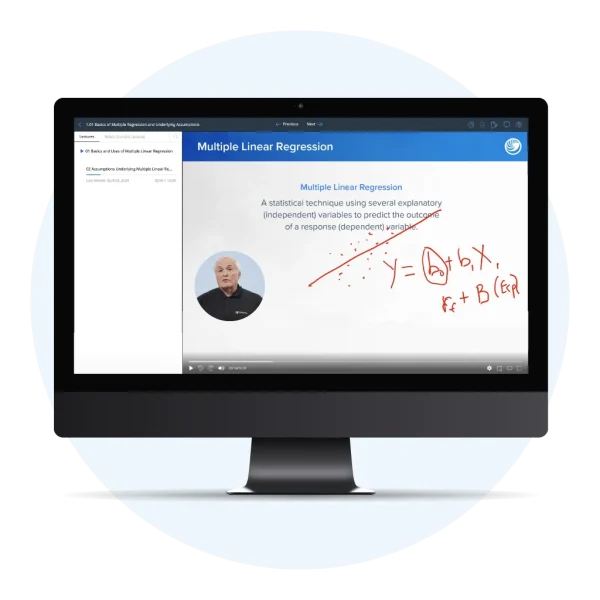
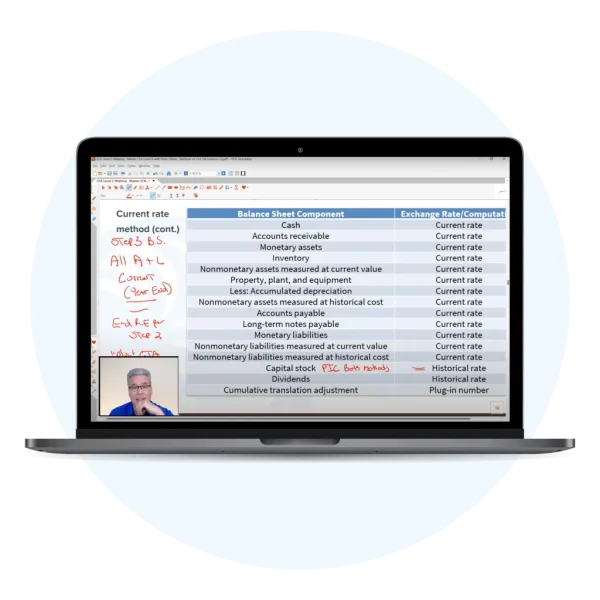
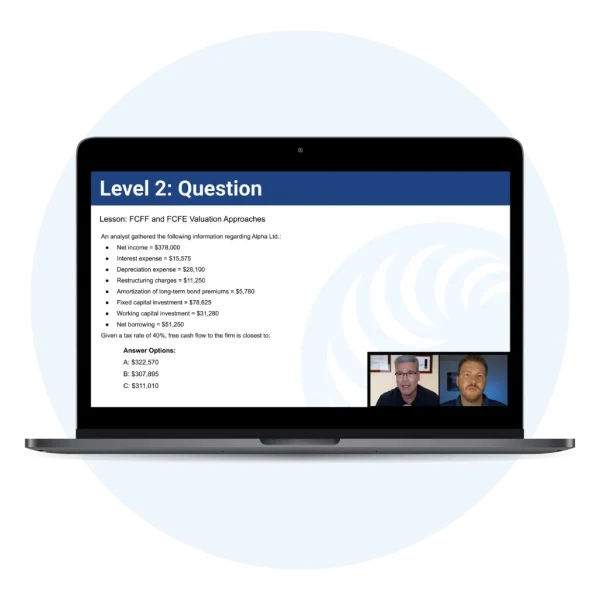
Learn from Peter Olinto and CFA charterholders who transform complex valuation models, financial statement analysis, and portfolio theory into clear, exam-ready frameworks. Each video lesson shows how Level 2 concepts appear within vignette-based item sets — reinforcing core ideas, exposing common traps, and teaching you to interpret exhibits and valuation outputs under real exam pressure.
2 Read
Application-Driven Study Guides
Our CFA Level 2 study materials distill dense readings into practical, vignette-ready guides that emphasize valuation logic, financial analysis, and cross-topic connections. Each section shows how multiple Learning Outcome Statements link within a single item set — so you learn to interpret exhibits, challenge assumptions, and solve valuation problems efficiently on exam day.
View Sample Guide
3 Practice
Case-Based QBank for Item-Set Mastery
Our CFA Level 2 QBank trains you to interpret financial exhibits, analyze model outputs, and solve multi-layered valuation problems across equity, fixed income, derivatives, and alternatives all through case-style item sets that mirror real exam conditions. Every explanation walks the full reasoning process, teaching you to evaluate data and eliminate distractors under time pressure.
Passage
Compass Engineering's board of directors is deciding between cash dividends or a share repurchase program as a method to begin returning cash to shareholders. Liam Fischer, a member of the board, states that both cash dividends and share repurchases have certain advantages that should be considered:
| Advantage 1: | Share repurchases tend to be more flexible. Although dividends can be raised, lowered, or suspended, they appear to create an expectation among investors that the distribution will continue in the future. Share repurchases do not seem to create the same expectation. |
| Advantage 2: | If the tax rates for capital gains and dividends are the same, and the information content is the same, then shareholders' wealth will be greater with cash dividends since all shareholders receive cash. |
Alicia Wu, the chairman of the board, indicates that Compass should review the long-term trends in the country (the United Kingdom) before deciding.
After deliberation, the board favors a share repurchase program. Jessica King, another member of the board, is concerned about the effect of share repurchases on Compass' EPS. She collects the following data for 20X2:
In addition, King wonders what effect share repurchases have on companies' book values. She gathers data from three of Compass' peers who have made a share repurchase:
The board members then discuss the best approach for Compass to repurchase shares. King has identified two possible scenarios, both using the same amount to repurchase shares:
Scenario 1: Purchase shares using all cash on hand.
Scenario 2: Purchase shares with funds from an issuance of debt.
Wu states that her preference is to choose a method by which the company can control the process and execute it quickly. She also prefers a process that would allow Compass to discover the minimum price at which it can repurchase the desired number of shares.
Based on Scenario 1 and Exhibit 1, a share repurchase would cause Compass' 20X2 EPS to be closest to:
- £6.72
- £6.77
- £6.80
Explanation:
Share repurchases are a popular alternative to cash dividends for returning cash to shareholders. Repurchases allow companies to purchase shares currently being held by shareholders using one of several methods. Once repurchased, the shares are either held for reissue (ie, treasury shares) or retired (ie, canceled shares).
The repurchase leaves fewer shares for investors to hold (ie, shares outstanding), which often results in a change to a company's per-share financial ratios (eg, EPS). Like dividends, share repurchases are made using corporate cash, whether the cash is on hand or obtained through the issuance of new debt.
- When cash on hand is used, EPS always increases.
- When new debt is issued, the change in EPS depends on the company's after-tax cost of debt and its earnings yield.
In this question, Compass' EPS following the share repurchase would be £6.77, calculated below.
(Choice A) £6.72 results from incorrectly applying the company's tax rate to the cash used to repurchase shares, arriving at cash of £400 million [£500 million × (1 − 0.2)].
(Choice C) £6.80 incorrectly uses the company's share price instead of the purchase price to calculate the number of shares repurchased. Companies do not always repurchase shares at the market price.
Things to remember:
Share repurchases are a popular alternative to cash dividends. They often result in a change to a company's per-share financial ratios. When cash on hand is used for a repurchase, EPS will always increase. When new debt is issued instead, the change in EPS depends on a company's after-tax cost of debt and its earnings yield.
Passage
Tom Johnson, CFA, is a portfolio manager at Universal Advisors, a US-based wealth management firm that serves high-net-worth individuals and families. Universal's equity portfolio offering includes separately managed accounts (SMAs) in which clients own individual securities. Johnson manages the portfolio with an aggressive high-risk, high-reward strategy, investing mostly in small-cap growth stocks. To reduce transaction costs and to simplify trading and settlement, Universal buys only US-listed securities for client accounts.
Johnson instructs Francois Martin, a CFA Level II candidate and new equity analyst at the firm, to conduct research on Vent Industries, a French wind turbine manufacturer. Vent is dually listed on exchanges in France and in the US. Martin, a French national who recently moved to the US, is already familiar with the company since he has been following it personally for the past two years.
After completing due diligence on Vent, Martin is thoroughly impressed by the investment prospects and suggests that Johnson add the US-listed shares of Vent to client portfolios. Johnson, as the sole decision-maker, reviews Martin's research and financial models but wants to think about the suggestion before reaching a conclusion.
Martin is so impressed with Vent's investment prospects that he wants to buy it for his personal account. For guidance, Martin references Universal's publicly available personal transaction disclosure, which states only the following:
"Investment personnel are subject to policies and procedures regarding their personal trading."
Needing more detail, Martin checks with the firm's compliance officer, who informs him that the firm does have policies and procedures designed to prevent potential conflicts of interest related to personal trading. Universal does not require that employees obtain preclearance before trading, but the firm's policies do require:
- a two-day blackout period before and after client trades, and
- a quarterly report by its investment decision-making personnel on transactions and holdings.
Based on this information, Martin immediately places an order to buy Vent shares listed in France through his personal French brokerage account, which he established prior to joining Universal. Three days later, Johnson decides to invest for clients in the US-listed shares of Vent and places the order through Universal's trading desk.
Johnson is a board member for a local hospital endowment; for this, he receives modest compensation. Universal has approved Johnson's board participation and compensation. Johnson is considered to be a thoughtful and successful investor. The other board members, unhappy with the fees and performance of the endowment's existing income-oriented large-cap equity manager, asked Johnson a year ago if he would be willing to manage the equity portion of the endowment. Johnson responded by stating:
"The hospital provides so much to this community, I would be happy to manage the endowment's equity portfolio. It won't even take much time; I will manage the endowment portfolio as an exact replica of Universal's equity portfolio."
The next month, without informing Universal, Johnson began managing the endowment portfolio as a mirror image of Universal's equity strategy.
Recently, Johnson evaluated the investment prospects of an upcoming IPO for a small-cap biotech firm. The company does innovative cancer research, but it is still years away from profitability. After conducting thorough due diligence, Johnson has concluded this is a great investment opportunity; he would like the hospital endowment to participate, believing the other board members would be excited about the company's cancer research.
Johnson speaks to Universal's lead underwriter and requests that 5% of the firm's IPO allotment be allocated to the endowment. A few days later, when the IPO is priced and allocated, Universal receives 95,000 shares and the endowment receives 5,000 shares.
Do Universal's personal transaction disclosure policies comply with CFA Institute's required and recommended procedures?
- No.
- Yes, since no disclosure is required.
- Yes, since they meet the minimum disclosure requirements.
Explanation:
Standard VI(B) Priority of Transactions requires Members and Candidates to place clients' and employers' financial interests before their own when conducting investment transactions and recommends avoiding even the appearance of conflicts of interest.
Firms should have policies and procedures to address such issues. Members and Candidates should fully and publicly disclose their firm's policy regarding personal securities transactions. If such a policy is established, CFA Institute requires that it be disclosed with some level of detail, not simply in general, nondescript ("boilerplate") language, as was the case in this scenario.
Although each firm should develop specific provisions applicable to its circumstances, publicly available details of firm policies must be informative and convey the essence of full and complete disclosure to alleviate the public's concern regarding the potential for conflicts of interest (Choices B and C).
Things to remember:
A firm's policy on personal investing must be disclosed with some level of detail, as required by CFA Institute, and cannot be written in general, nondescript language. Although each firm should develop specific provisions, the guiding principle is that a complete disclosure of the policy must be conveyed to alleviate the public's concern regarding the potential for conflicts of interest.
Passage
Chao Li is a vice president at Tailwind Capital, a private equity (PE) firm. He is currently raising £100 million for Tailwind Fund A. Li meets with An Heng, an associate at Insular Insurance Co., a potential institutional investor. In their meeting, Li explains the general structure of PE funds to Heng:
Statement 1: The limited partners (LPs) and the general partner (GP) in a private equity fund participate in managing the fund.
Statement 2: The GP is entitled to carried interest, which is typically a percentage of the fund's profits after management fees.
Statement 3: PE funds are closed-end funds, so LPs can redeem their investments only at specified times.
Heng says, "I understand there are costs associated with investing in PE, such as significant performance fees, dilution costs whenever the PE firm starts new funds, and annual audit costs. And I know that there are some agency risks involved with investing in a PE fund. Is there a governance provision that would address GP gross negligence?"
Subsequently, Li raises the full £100 million for Fund A. One of the fund's investments is ModernWare, an online services company. The initial investment is £20 million: £13 million in debt, £2 million in preferred equity, and £5 million in the PE fund's equity. Tailwind plans to sell ModernWare 5 years from now and plans to reduce the debt balance by £10 million by the time of exit. The promised return for the preferred equity holders is 15%.
Several years after the fund's inception, Tailwind exits two investments: StoneWare and BronzeWare (Exhibit 1). Carried interest to the GP is accrued on a deal-by-deal basis and equals 20% of the profits from each exit. The hurdle rate is 10%. When a deal's IRR is above the hurdle rate, carried interest is accrued; when a deal's IRR is below the hurdle rate, a clawback penalty amount is accrued if there is a loss.
Twelve years after the fund's inception, Li meets with Heng again to review Fund A's performance, shown in Exhibit 2.
Which of Li’s statements on Tailwind's fund structure is incorrect?
- Statement 1
- Statement 2
- Statement 3
Explanation:
Statement 1: The limited partners (LPs) and the general partner (GP) in a private equity fund participate in managing the fund.
Statement 2: The GP is entitled to carried interest, which is typically a percentage of the fund's profits after management fees.
Statement 3: PE funds are closed-end funds, so LPs can redeem their investments only at specified times.
PE funds are typically structured as limited partnerships in which the GP (ie, fund manager) acts as an agent on behalf of the LPs (ie, investors). The GP actively manages the fund and is responsible for all debts (ie, unlimited liability). The LPs commit capital to the GP, and their liabilities are limited to their invested amounts. Statement 1 is incorrect since LPs are not actively involved in managing the fund.
(Choice B) In exchange for managing funds, GPs charge management fees, some transaction fees, and carried interest.
(Choice C) PE funds are closed-end funds since existing investors are restricted from redeeming their shares for long periods of time. In addition, new investors can be restricted from entering the fund during certain windows.
Things to remember: A private equity fund consists of a general partner (GP) (ie, fund manager) and limited partners (ie, investors). The GP is entitled to management fees and carried interest in exchange for managing the fund. However, the GP is responsible for all the fund's debt (ie, unlimited liability), whereas the limited partners' liabilities are limited to their invested amounts.
Passage
Botan Saito is a portfolio manager for Spire Financial. Spire's investments are largely domestic, and Saito plans to diversify Spire's holdings by adding investments in international markets. Saito identifies three countries that he will research further. He collects the following economic data for each country, using average year-on-year growth rates:
During his research, Saito realizes that numbers are not fully explaining the economic differences in these countries. He further researches institutional economic information, shown in Exhibit 2:
Country 2 is planning to implement new policies that create a more open trade policy. Saito expects that this will result in a higher permanent steady-state GDP growth rate.
Saito is interested in how economic factors will ultimately impact each country's stock market. He notes that Country 3's:
- GDP growth is slightly above the country's steady-state GDP growth rate in 20X4;
- earnings-to-GDP ratio was above the country's historical average in 20X4; and
- price-to-earnings ratio of the country's publicly traded stocks was below its historical average in 20X4.
Saito is also interested in how potential GDP will affect each country's bonds. He arrives at the following conclusions:
Conclusion 1 Actual GDP growth relative to a country's potential GDP growth rate is an important factor in central bank decision-making and the likelihood of changes to the central bank's policies.
Conclusion 2 A decrease in a country's potential GDP growth rate increases the likelihood that the credit ratings on its sovereign debt will be downgraded.
Saito wishes to identify how capital deepening will affect each country's per capita output growth. Based on the neoclassical model, which of the following factors is most appropriate for Saito to consider?
- Capital-to-labor ratio
- Steady-state GDP growth
- Average hours worked per worker
Explanation:
Capital deepening is an increase in a country's capital per worker (ie, capital-to-labor ratio). When workers gain more capital, they traditionally become more productive. However, the neoclassical model of economic growth states that the per capita production function, which measures capital per worker against output per worker, exhibits diminishing marginal returns. Therefore, when a country has a greater capital-to-labor ratio, it will likely see a smaller per capita output increase from capital deepening than if it had a lesser capital-to-labor ratio, all else equal.
(Choice B) Steady-state GDP growth considers several factors, including capital growth, labor growth, capital and labor as a percentage of total factor cost, and total factor productivity. Therefore, this measure would not be the most appropriate to identify how capital deepening will affect each country's growth in output per capita.
(Choice C) Average hours worked per worker affects the factor of labor, not capital, when calculating economic output. Therefore, this measure would not be the most appropriate to use when specifically identifying how capital deepening will affect each country's growth in output per capita.
Things to remember:
Capital deepening is an increase in a country's capital per worker. In the neoclassical model, the per capita production function has diminishing returns. Therefore, a country with a greater capital-to-labor ratio will likely see a smaller output increase from capital deepening than a country with a lesser capital-to-labor ratio.
Passage
Herman Schmidt is a fund manager working at Rosige Zukunft LLC (RZ), a derivatives trading firm. RZ uses the carry arbitrage model to assess the value of bond forward contracts. Exhibit 1 contains information on several German government bonds that pay coupons once per annum and have five years remaining until maturity. Schmidt directs Hedwig Meyer, an RZ analyst, to price forward contracts on Bond A, Bond B, and Bond C. The 6-month risk-free rate is 1.50% and the 1-year risk-free rate is 2.00%.
Schmidt and Meyer discuss different methods for valuing interest rate and currency swaps. Exhibit 2 contains information on at-market EUR and CHF interest rate swaps, and the CHF/EUR exchange rate.
Schmidt has RZ initiate a fixed-for-fixed EUR/CHF currency swap, agreeing to pay 1.20% in CHF and receive 1.80% in EUR. RZ exchanges the swap notional with the counterparty at contract initiation, paying EUR 10 million and receiving CHF 10.5 million. Six months later, at-market 2.5-year fixed-for-fixed EUR/CHF currency swaps are quoted at 1.60% EUR for 1.40% CHF and the spot CHF/EUR exchange rate is 1.1000.
Schmidt anticipates that the equity of Dash Haber Ltd., a UK clothing retailer, will outperform versus expectations. He decides to use a 1-year, quarterly settled, equity-return-for-fixed-interest rate swap to gain long exposure to Dash Haber equity. Exhibit 3 contains information related to the swap:
All interest rates are annual compound rates and are based on a 360-day year.
Based on Exhibit 1, the no-arbitrage 6-month forward price of Bond A is most likely:
- less than its spot price.
- equal to its spot price.
- greater than its spot price.
Explanation:
The no-arbitrage forward price of an asset is the:
- future value of the asset's spot price, adjusted for the
- costs and benefits (ie, "carry" costs and benefits) of holding the asset to the forward contract expiration.
The forward price of a zero-coupon bond is just the future value of the bond's spot price since there are:
- no explicit carry costs, due to the opportunity cost of capital being captured in the future value of the spot price, and
- no carry benefits since a bondholder receives no periodic coupon payments.
As a result, CC0 and CB0 in the formula above both equal 0, reducing the calculation of the no-arbitrage forward price to:
In this scenario, the 6-month forward price of the 5-year zero-coupon bond (ie, Bond A) is calculated as:
F0 = 86.261 (1.015)0.5 = 86.906
If interest rates are positive, the no-arbitrage forward price of an asset with no holding costs or benefits is greater than the asset's spot price (Choices A and B). The spot/forward price difference reflects the opportunity cost of capital (eg, cost of financing a position in the asset) over the time to the forward contract expiration.
Things to remember:
The no-arbitrage forward price of an asset is the future value of the asset's spot price adjusted for the costs and benefits of holding the asset to the forward expiration. The forward price of an asset with no holding costs or benefits is above the asset's spot price by the opportunity cost of capital over the time to the forward expiration.
4 Assess
Full-Length CFA Level 2 Mock Exams
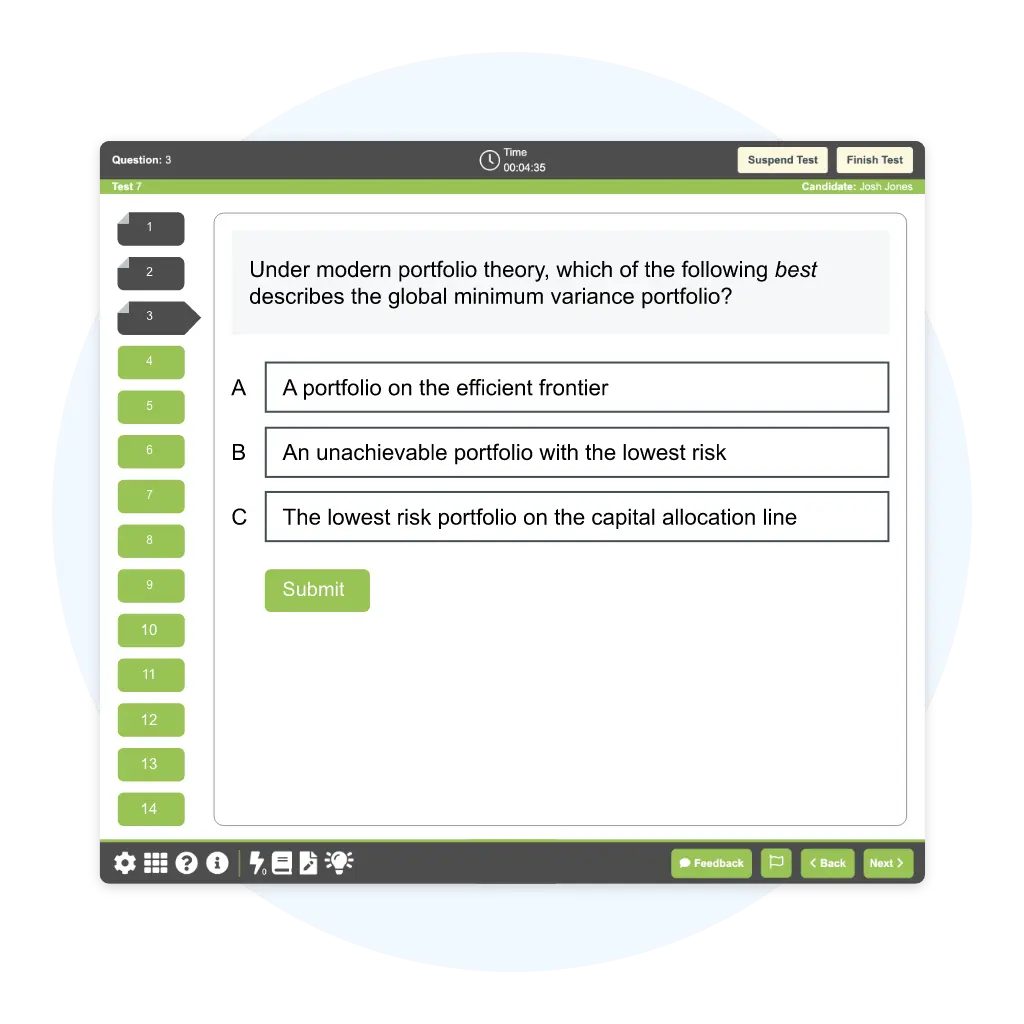
Experience the real thing before exam day. Our CFA Level 2 mock exams replicate actual exam timing, interface, and topic weighting across all vignette-based item sets. Detailed performance analytics pinpoint weak areas after each simulation so you can refine your strategy and walk into the testing center with nothing left to guess.
Buy nowCFA Level 2 Study Tools That Accelerate Retention
Complement your CFA Level 2 online course with science-backed tools designed to strengthen weak areas, reinforce key models, and keep your study plan on track through exam day.
Smart Flashcards & ReadyDecks
Build custom decks for formulas like the Gordon Growth Model or Black-Scholes, or study from expert-curated ReadyDecks. Spaced repetition adapts to your performance, surfacing the cards you need most.
SimpleSheets+ Formula Reference
Access a consolidated reference of essential Level 2 formulas, definitions, and valuation frameworks. Print them, study digitally, or use them for rapid review before your exam window.
Adaptive Study Planner
Receive a dynamic study schedule that adjusts to your exam date, progress, and performance across all CFA Level 2 topic areas — so you always know exactly what to cover next.
StudyPass™ Guarantee
If you don't pass the CFA Level 2 exam, request a free course extension and continue your preparation at no extra charge. Our investment in your success extends beyond a single attempt.
TotalPrep Series
A structured 3-phase learning experience featuring MasterClass concept reviews, Accelerate BootCamp intensive sessions, and live Q&A with CFA instructors — from study launch through exam week.
Smart Flashcards & ReadyDecks
Build custom decks for formulas like the Gordon Growth Model or Black-Scholes, or study from expert-curated ReadyDecks. Spaced repetition adapts to your performance, surfacing the cards you need most.
SimpleSheets+ Formula Reference
Access a consolidated reference of essential Level 2 formulas, definitions, and valuation frameworks. Print them, study digitally, or use them for rapid review before your exam window.
Adaptive Study Planner
Receive a dynamic study schedule that adjusts to your exam date, progress, and performance across all CFA Level 2 topic areas — so you always know exactly what to cover next.

StudyPass™ Guarantee
If you don't pass the CFA Level 2 exam, request a free course extension and continue your preparation at no extra charge. Our investment in your success extends beyond a single attempt.
TotalPrep Series
A structured 3-phase learning experience featuring MasterClass concept reviews, Accelerate BootCamp intensive sessions, and live Q&A with CFA instructors — from study launch through exam week.

Cross-Platform Mobile Access
Study seamlessly across devices with the UWorld Finance app. Your progress, notes, flashcards, and practice sessions sync automatically whether you're at your desk or commuting.
Hear From CFA® Level 2 Candidates Who Passed
Your CFA Level 2 Prep Journey Starts Here
Unlock success with our expertly crafted CFA Level 2 study course, designed to help you pass with confidence.
Core Essentials
- Study Guides (Digital eBook Access)
- CFA Level 2 QBank
- Performance Tracking Analytics
- Create Custom My Notebook Entries
- Build Custom Flashcard Decks
- Mobile Access via UWorld Finance App
Advanced Prep Course
- Expert-Led Video Lectures
- 1 Full-Length Mock Exam (Mock A)
- SimpleSheets+ Reference Outline
- Personalized Study Planner
- Expert-curated ReadyDecks Flashcards
Elite Full Course
- 3 Full-Length Mock Exams (Mocks A, B, C)
- Study Guides (Printed Book Set)
- StudyPass™, Access Until You Pass!
- MasterClass On Demand Sessions
- ExpertConnect Live Q&A Sessions
- Accelerate BootCamp Final Review
Study Guides
- 180-Day Digital eBook Access
- Create Custom My Notebook Entries
- Build Custom Flashcard Decks
- Mobile Access via UWorld Finance App
SimpleSheets+
- Digital In-product Supplement
- Access to Fundamental Formulas and Concepts
Mock Exams
- Mock Exams A & B
- 100+ Questions Not Found in the QBank
- Detailed Performance Tracking Analytics
-
Why CFA® Level 2 Demands a Different Prep Strategy
Level 1 tests knowledge breadth. Level 2 tests analytical depth — through vignettes that require you to synthesize data, apply models, and defend valuation conclusions.
Vignette-Based Item Sets
Every question is embedded in a multi-paragraph case with exhibits, requiring integrated analysis rather than isolated recall.
Applied Valuation Focus
Build and interpret DCF, DDM, residual income, and comparables models the core of equity and corporate analysis.
Cross-Topic Integration
Questions blend FSA with equity, fixed income with derivatives, and economics with portfolio management.
Higher Time Pressure
88 questions across 4 hours 24 minutes — under 3 minutes per question including case reading and exhibit analysis.
Advanced Quantitative Modeling
Multiple regression, time-series forecasting, and machine learning concepts applied to financial decision-making.
Global & Multi-Currency Analysis
Currency exchange rate modeling, multinational financial reporting, and cross-border investment analysis.
Frequently Asked Questions (FAQs)
How is UWorld’s CFA Level 2 review course different from Kaplan Schweser or Mark Meldrum?
UWorld’s CFA Level 2 review course is built differently from the ground up. While many providers outsource content or prioritize volume over precision, every question, explanation, and study guide in our CFA Level 2 prep course is developed by full-time, onsite CFA charterholders and finance faculty, not freelancers or crowdsourced contributors.
Each piece of content passes through multiple rounds of peer review, curriculum alignment verification, and editorial quality checks before reaching you. Professionally designed visuals including financial exhibits, valuation tables, and analytical diagrams are integrated directly into explanations to replicate the complexity you’ll face on exam day.
The platform itself is purpose-built for vignette-based learning, with an interface that mirrors Prometric testing conditions.
The result: CFA Level 2 study materials that train applied reasoning not memorization so you’re prepared to interpret data, apply valuation frameworks, and solve multi-step item sets under real exam pressure
How is UWorld CFA Level 2 different from official CFA study materials?
The CFA Institute curriculum is the definitive source comprehensive, authoritative, and foundational. But at over several thousand pages, it’s designed as a reference text, not a learning system.
UWorld’s CFA Level 2 study materials take that same content and re-engineer it for how candidates actually learn and retain under exam pressure. Where the official readings present concepts linearly, our study guides restructure them around how topics appear within vignette-based item sets connecting related LOS across financial reporting, valuation, and portfolio management into integrated analytical frameworks.
Layer in expert-led video instruction from Peter Olinto and CFA charterholders, 1,350+ exam-realistic practice questions with step-by-step visual explanations, adaptive performance analytics that surface your weakest areas, and a personalized study planner that keeps your preparation on pace and you have a complete CFA Level 2 prep system built for efficient, high-retention exam preparation.
Many candidates use UWorld alongside the official curriculum, relying on our platform as their primary study and practice environment while referencing CFAI readings for additional depth when needed.
What study materials are included in UWorld’s CFA Level 2 course?
UWorld’s CFA Level 2 study materials include a complete, integrated system designed specifically for valuation-heavy application and vignette-based reasoning.
Core learning resources include:
- Expert-led video lessons covering every Learning Outcome Statement
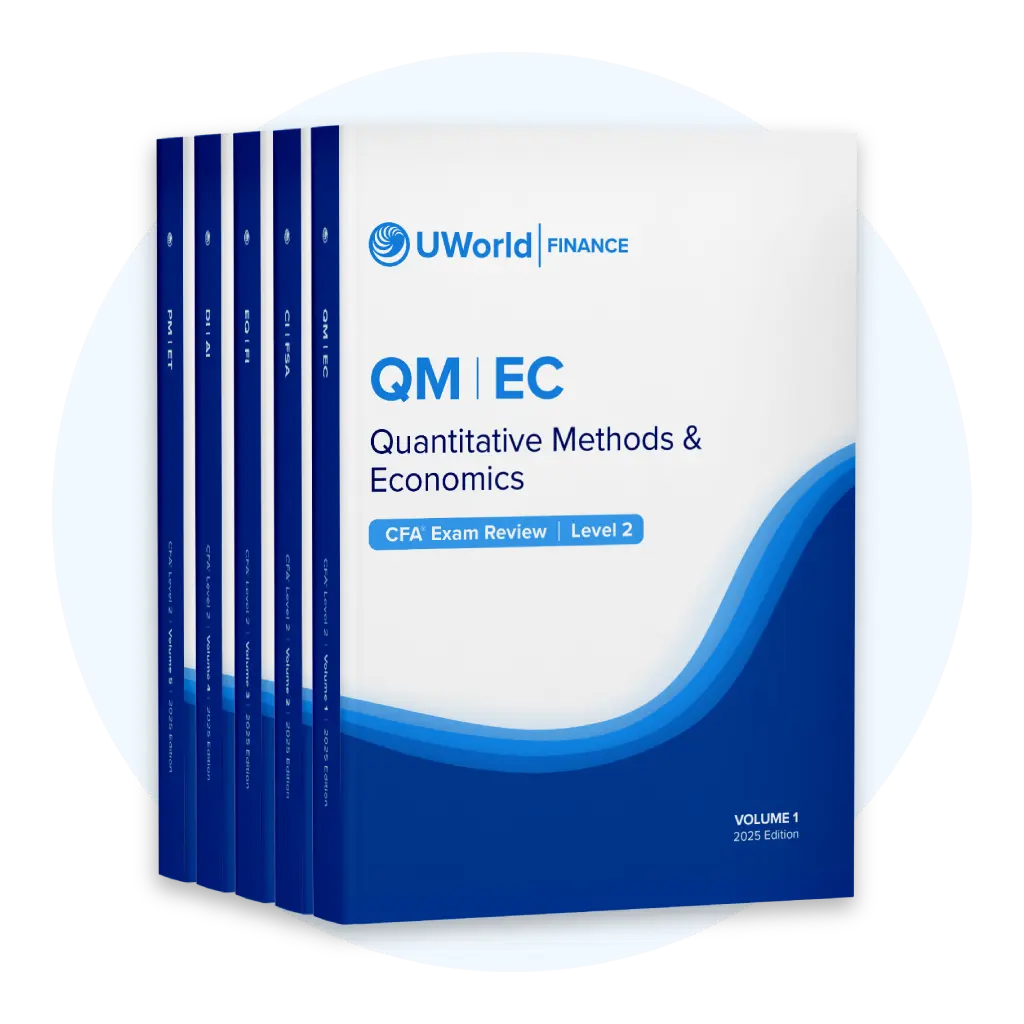
- Digital and printed study guides aligned to the current CFA Institute curriculum
- SimpleSheets+ for high-yield formulas and definitions
- 1,350+ vignette-based practice questions
- Full-length mock exams that replicate the real exam interface
- Smart flashcards and ReadyDecks
- Personalized study planner
- Advanced performance analytics
Every component of our CFA Level 2 exam material undergoes multiple rounds of expert review by CFA charterholders to ensure:
- Alignment with current Learning Outcome Statements
- Accuracy and conceptual clarity
- Realistic exam difficulty
- Clear explanations that eliminate ambiguity
All materials are updated annually and accessible on desktop and mobile.
Which CFA Level 2 study package should I choose?
It depends on how you learn best. Core is ideal if you want focused QBank access and digital study guides at a lower price point. Advanced adds video lectures, mock exams, flashcards, and a study planner, our most popular option for candidates who want a complete CFA Level 2 online course. Elite includes everything plus printed study guides, all 5 mock exams, live TotalPrep sessions, and StudyPass access until you pass the right choice if you want maximum support and flexibility.
I passed Level 1 with another provider. Can I switch to UWorld for Level 2?
Absolutely and many candidates do. UWorld’s CFA Level 2 prep course is fully self-contained with no prerequisite from our Level 1 materials. Start with a free trial to experience the vignette-based QBank, video lectures, and study guide quality before committing.
Are UWorld’s CFA Level 2 prep materials updated for the 2026 curriculum?
Yes. Our in-house CFA charterholders review and update all CFA Level 2 preparation material annually to reflect curriculum revisions, Learning Outcome Statement changes, and exam format updates.
Our course content covers and aligns to all of the following concept categories:
- Quantitative Methods
- Economics
- Financial Statement Analysis
- Corporate Issuers
- Equity Investments
- Fixed Income
- Derivatives
- Alternative Investments
- Portfolio Management
- Ethical and Professional Standards
This ensures your CFA Level 2 exam prep reflects the most current exam expectations.
Does the CFA Level 2 test prep include full-length mock exams?
Yes. Depending on your package, you receive up to 3 full-length mock exams as part of your CFA Level 2 exam prep materials.
These mock exams replicate:
- Prometric-style testing interface
- Accurate topic weighting
- Integrated vignette-based item sets
- Realistic timing conditions
Practicing under exam-like pressure improves endurance and reduces test-day surprises.
How long do I have access to the CFA Level 2 online course?
Access runs from your purchase date through the month following your scheduled exam window so that you have more than enough time to fully prepare. Furthermore users who choose the Elite package receive our StudyPass™, which allows an extension if you do not pass, provided eligibility requirements are met. This ensures you have peace of mind so that your CFA Level 2 online preparation continues without interruption.
What is the recommended study time for CFA Level 2 prep?
The CFA Institute recommends approximately 300 hours of study and from our data and experience we see that successful candidates typically start their Level 2 prep five to six months before their exam and follow a structured study plan.
To help candidates plan their preparation, UWorld offers a dynamic study planner that works with your timeline to create a schedule that balances efficient pacing, concept mastery and performance tracking to help you throughout your CFA preparation Level 2 journey.
Can I track my performance in the CFA Level 2 course?
Yes. UWorld includes integrated analytics that track your individual performance by topic, question type, and Learning Outcome Statement.
This dashboard is an invaluable part of CFA Level 2 prep because it gives you both an at-a-glance and a granular view of your strengths and weaknesses so you can refine your CFA Level 2 prep material strategy and focus your time efficiently.
Once you start interacting with the platform and collecting data, our study planner can dynamically adapt to the areas where you need the most help and move.
Is investing in a CFA Level 2 prep course worth it if I have free resources?
Free resources are okay if you need a high level refresher on a topic but they aren’t enough for comprehensive study because they often lack structure, alignment and verified accuracy.
UWorld’s CFA Level 2 study materials are professionally vetted and undergo rigorous quality control unlike free materials that can be outdated, incorrect or randomly generated by AI.
Consider what’s at stake when weighing free vs commercial options:
- CFA Level 2 exam fees can exceed $1,400
- Preparation requires 300+ hours
- A failed attempt delays career progression
Investing in structured CFA Level 2 exam study materials reduces risk and improves efficiency.
Is mobile access available for the CFA Level 2 study material online?
Yes. UWorld’s mobile app allows you to practice QBank questions, review flashcards and watch video lessons anywhere. Progress syncs across devices, so your CFA Level 2 materials remain consistent whether you study at home, work, or while commuting.
We built our CFA Level 2 exam prep platform to be accessible anytime and anywhere you have the opportunity to study and our dynamic study planner makes it easy to arrange lessons and focus areas around your busy schedule.
Learn From the CFA® Instructors Candidates Trust Most
UWorld’s CFA® Level 2 exam prep course is led by experienced CFA charterholders and finance professionals with decades of teaching and industry expertise. Instructors are hand-selected for their ability to explain complex concepts clearly, connect theory to real-world application, and prepare candidates for the analytical rigor of the CFA® exam.
Award-Winning Leader in Education Technology
UWorld has been recognized time and again as an innovator in education technology. We follow an iterative process of improvement based on student feedback and performance. UWorld’s accolades include making the GSV 150 list and earning honors like EY Entrepreneur of the Year and multiple EdTech Awards, highlighting our commitment to excellence.