

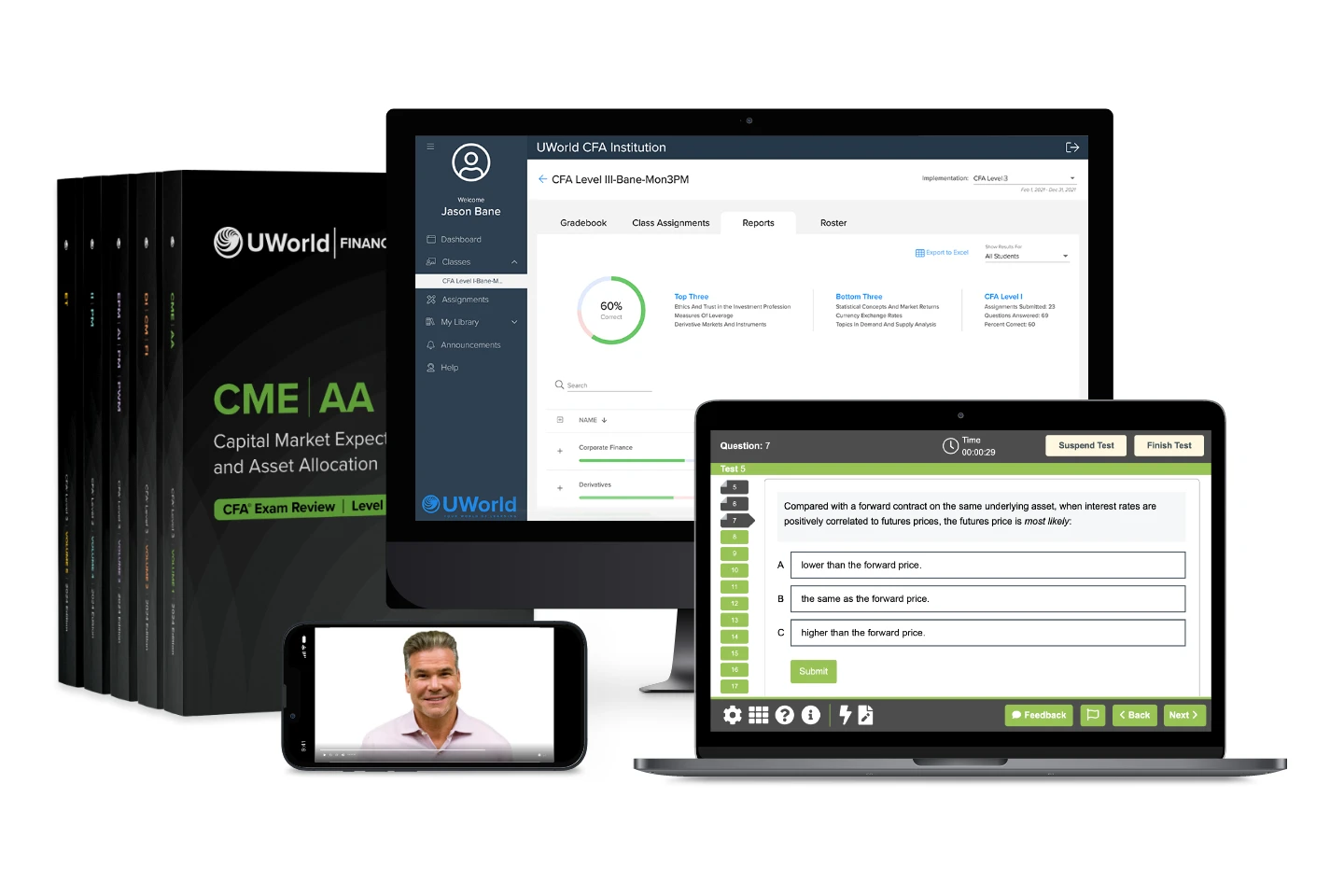





UWorld CFA Level 3 prep course bundle
CFA Level 3 Study Materials & Packages

Choose the Right CFA Level 3 Course Package

Our CFA Level 3 course packages support every stage of your final-level preparation. Every package covers all three specialized pathways.

Kick-Start 2026: Save 15% on Advanced or Elite CFA Prep Courses. Use code:

Kick-Start 2026: Save 15% on Advanced or Elite CFA Prep Courses. Use code:
Most Popular

Core

Essentials
 
$ 

Advanced

Prep Course
 
$ 
You Get It All!

Elite

Full Course
 
$ 
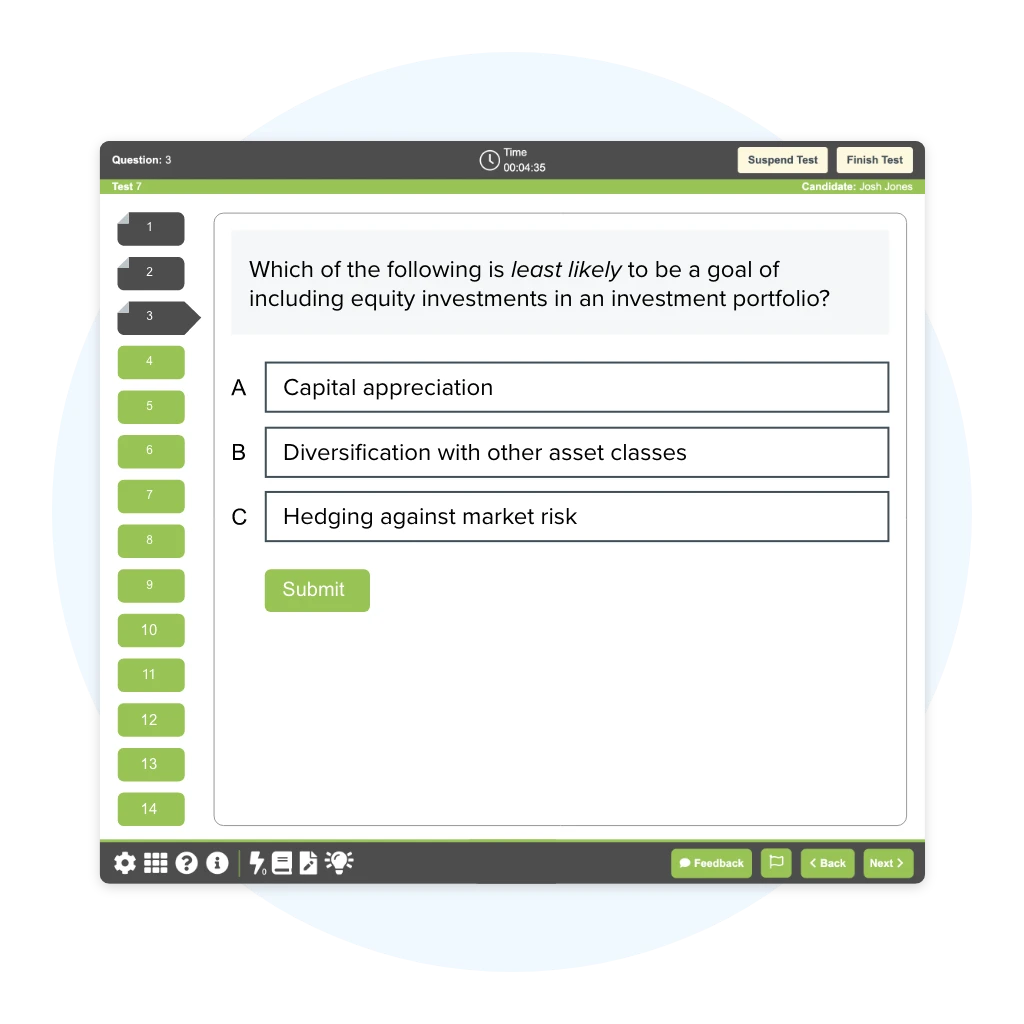
Practice with questions written by CFA charterholders that reflect the structure and difficulty of the CFA Level 3 exam. 900+ questions in our QBank (including 375+ Constructed Response Questions for IPS & Essay Mastery) and more available in our mock exams.
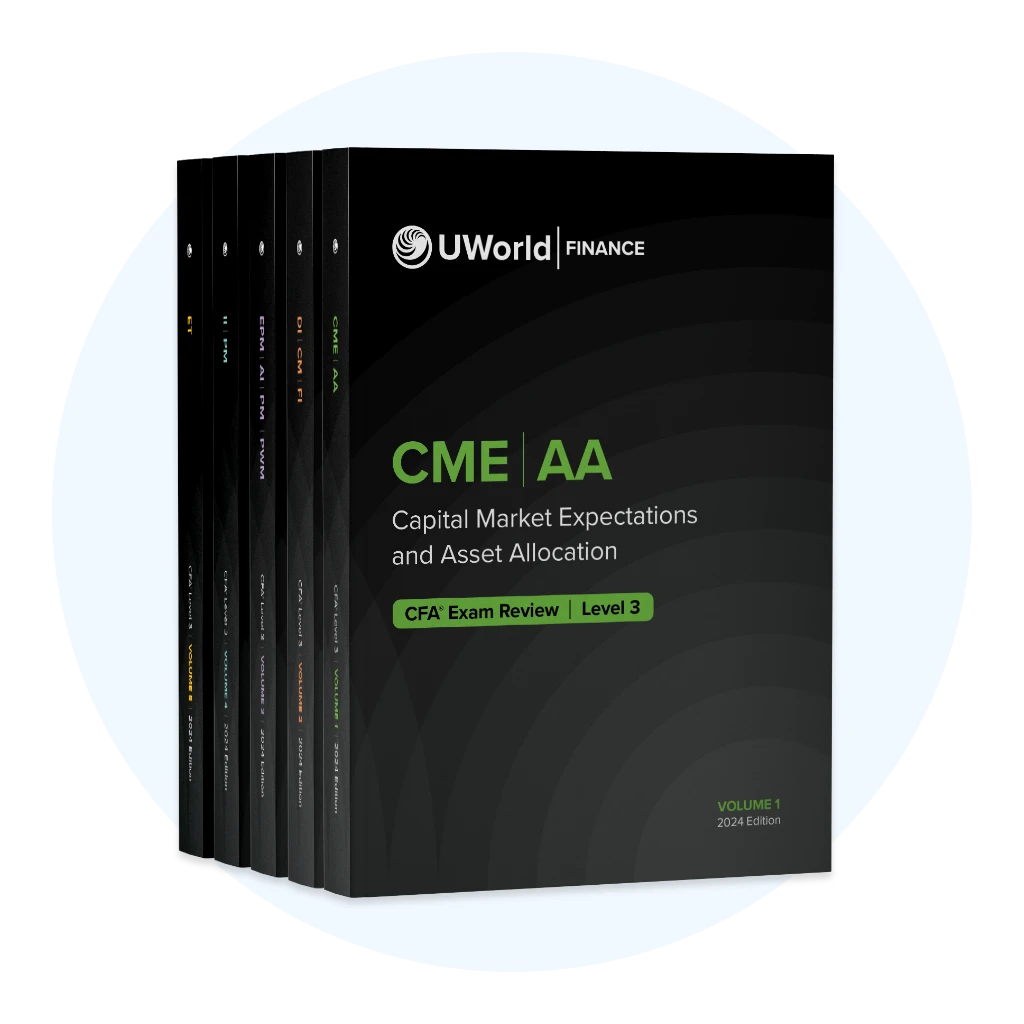
Our CFA Level 3 study materials include structured study guides that simplify the extensive CFA curriculum and focus on portfolio construction, IPS development, and institutional investment decision-making.

eBook Only

eBook Only

eBook + Printed Book Set

Monitor your progress, identify weak areas, and optimize your prep using detailed performance analytics.
Take your CFA prep on the go with full access to all study materials via the UWorld Finance - Exam Prep mobile app.
Save key content, take notes, and build a personalized digital study guide as you learn.
Get tutor-like guidance that provides instant answers trained by our experts.
Create a personalized study plan aligned to your test date and progress, helping you stay on track.
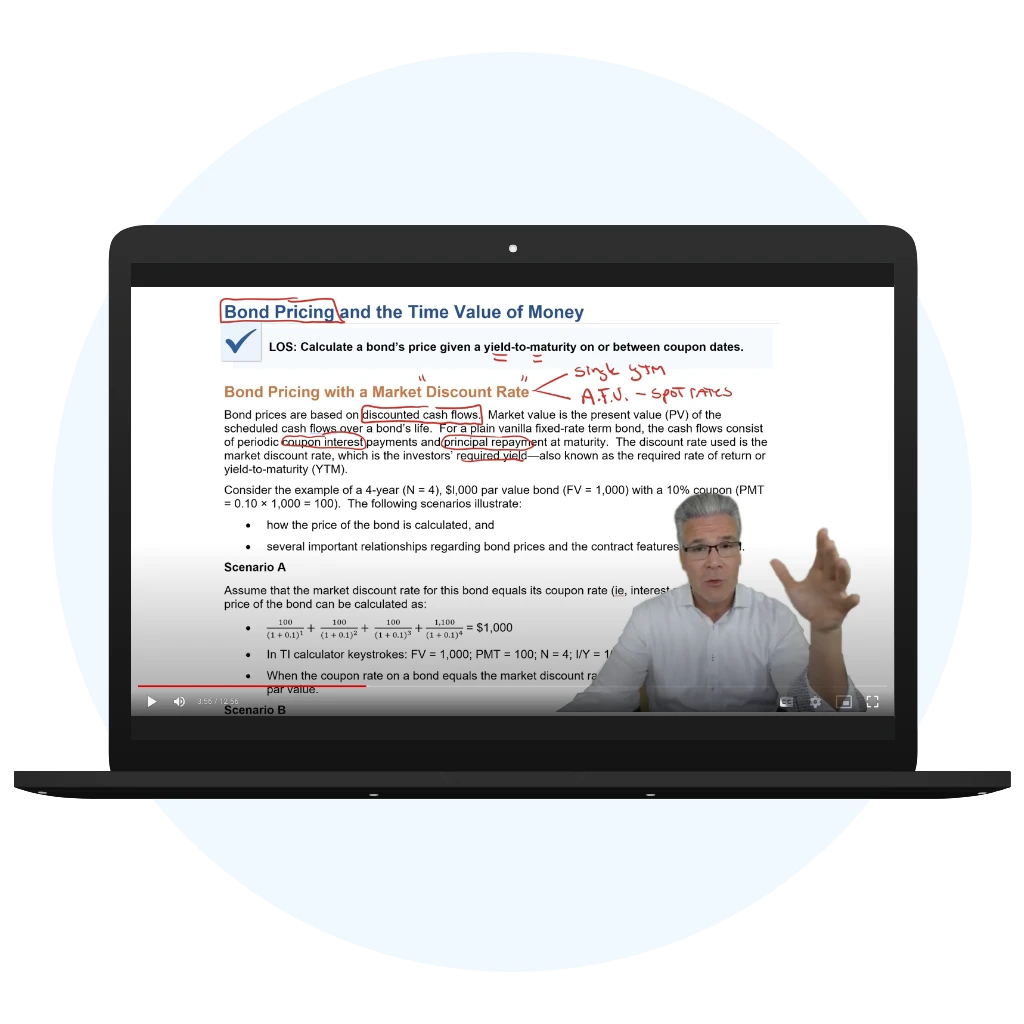
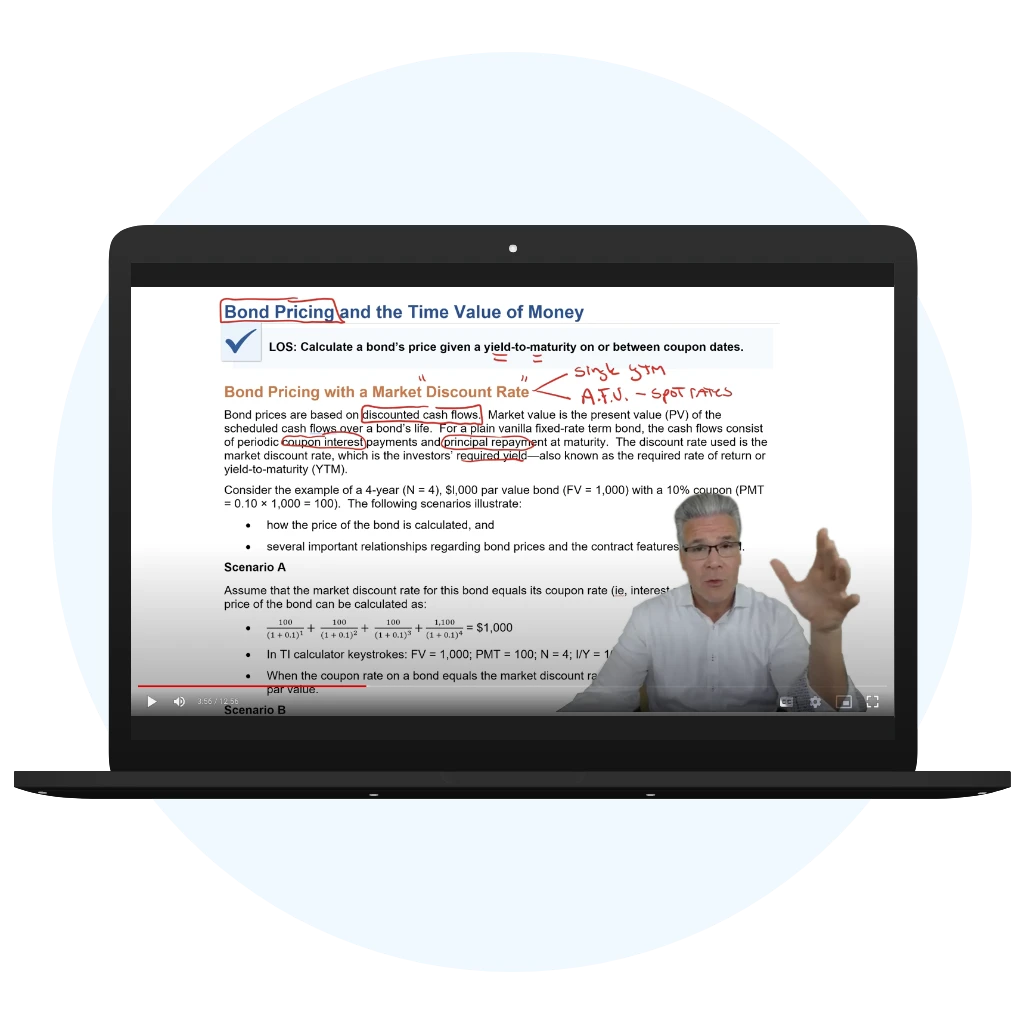
Get additional context and depth with bite-sized review videos that hone in on learning outcome statements.
Reference an outline of key formulas, definitions, and must-know concepts in a streamlined format for quick review.
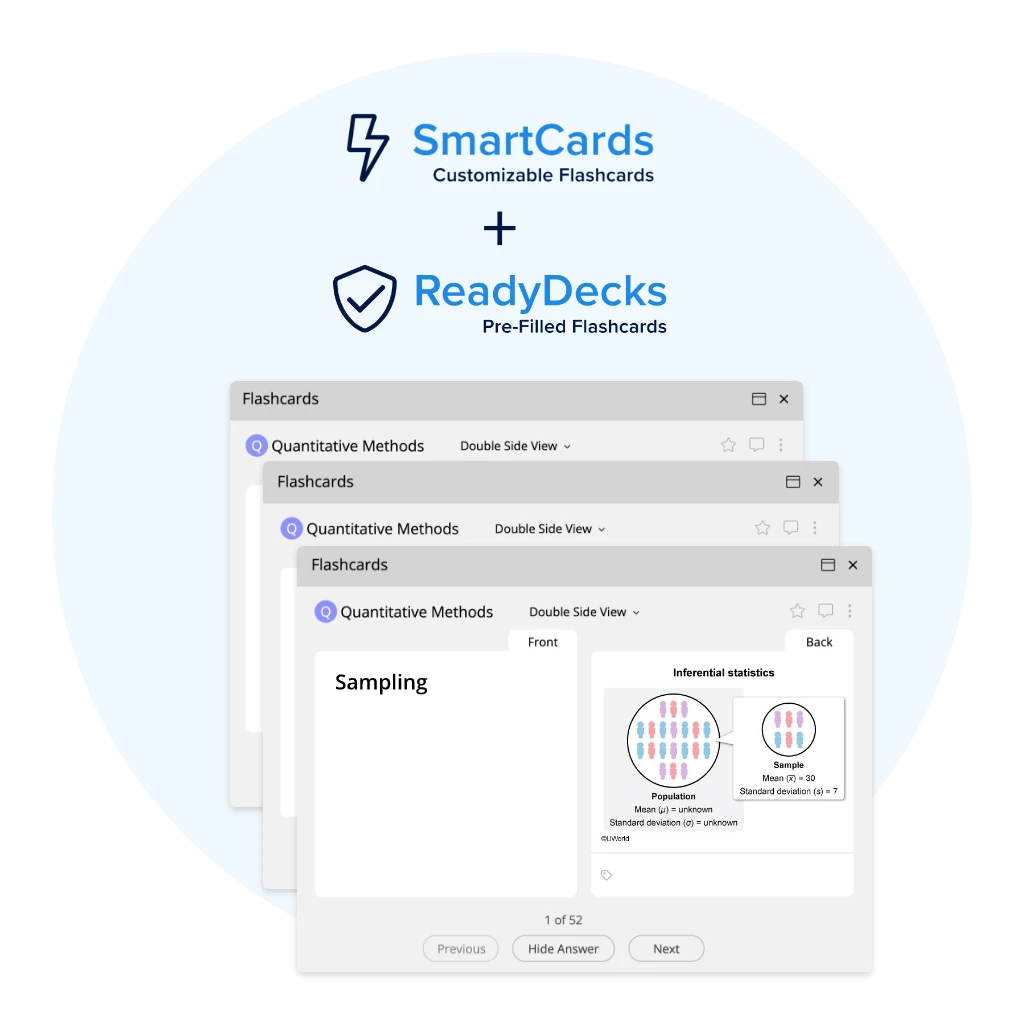
Create your own flashcards to reinforce key concepts, formulas, and definitions. Organize them by subject, topic, or custom tags. Study your personalized deck anytime, anywhere across devices.
Study with preloaded, expert-curated flashcards organized by subject, topic, or custom tag.
Simulate the real CFA Level 3 exam with full-length mock exams that replicate the dual-session format, including constructed response essays and item-set questions. These simulations strengthen your CFA Level 3 exam prep by helping you manage time, structure written responses, and justify portfolio recommendations under pressure. Including 44 questions in each mock exam.

1 Mocks

2 Mocks

Request a free course extension if you don’t pass the CFA Exam on your first try, giving you more time to succeed.
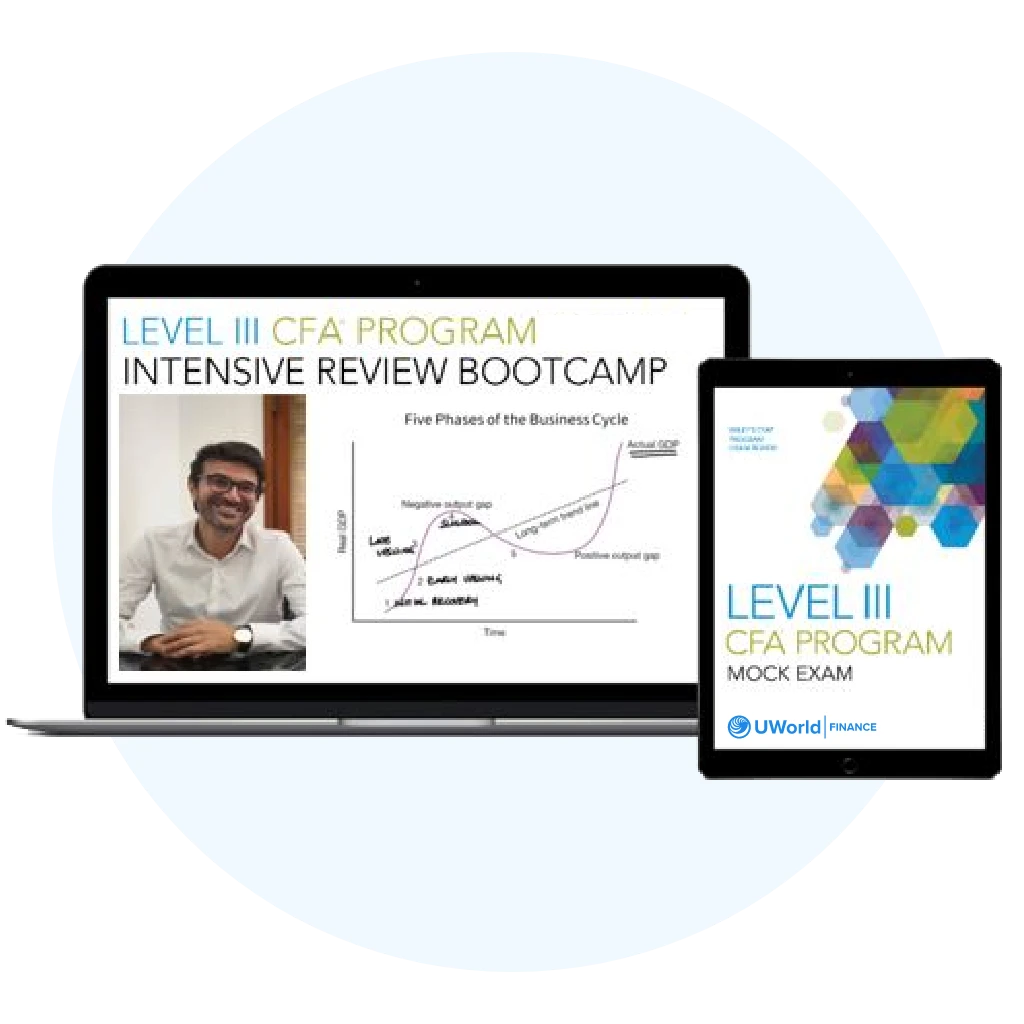
Turn practice into power with a 2-day, high-yield problem-solving experience designed to transform your prep and elevate your CFA Exam readiness.
Tackle your most challenging CFA questions live in real-time Q&A sessions. Get direct answers from experts when it matters most.
The TotalPrep Series is a 3-phase learning program designed to help CFA candidates maximize their exam performance. It includes Expert MasterClass, Accelerate BootCamp, and Live Q&A, each focused on different parts of the prep journey from core concept review to last-minute support.
Practice with questions written by CFA charterholders that reflect the structure and difficulty of the CFA Level 3 exam. 900+ questions in our QBank (including 375+ Constructed Response Questions for IPS & Essay Mastery) and more available in our mock exams.

eBook Only

Our CFA Level 3 study materials include structured study guides that simplify the extensive CFA curriculum and focus on portfolio construction, IPS development, and institutional investment decision-making.
Monitor your progress, identify weak areas, and optimize your prep using detailed performance analytics.
Take your CFA prep on the go with full access to all study materials via the UWorld Finance - Exam Prep mobile app.
Save key content, take notes, and build a personalized digital study guide as you learn.
Get tutor-like guidance that provides instant answers trained by our experts.

Advanced

 
$ 
Practice with questions written by CFA charterholders that reflect the structure and difficulty of the CFA Level 3 exam. 900+ questions in our QBank (including 375+ Constructed Response Questions for IPS & Essay Mastery) and more available in our mock exams.

eBook Only

Our CFA Level 3 study materials include structured study guides that simplify the extensive CFA curriculum and focus on portfolio construction, IPS development, and institutional investment decision-making.
Monitor your progress, identify weak areas, and optimize your prep using detailed performance analytics.
Take your CFA prep on the go with full access to all study materials via the UWorld Finance - Exam Prep mobile app.
Save key content, take notes, and build a personalized digital study guide as you learn.
Get tutor-like guidance that provides instant answers trained by our experts.
Create a personalized study plan aligned to your test date and progress, helping you stay on track.
Get additional context and depth with bite-sized review videos that hone in on learning outcome statements.
Reference an outline of key formulas, definitions, and must-know concepts in a streamlined format for quick review.
Create your own flashcards to reinforce key concepts, formulas, and definitions. Organize them by subject, topic, or custom tags. Study your personalized deck anytime, anywhere across devices.
Study with preloaded, expert-curated flashcards organized by subject, topic, or custom tag.

1 Mocks

Simulate the real CFA Level 3 exam with full-length mock exams that replicate the dual-session format, including constructed response essays and item-set questions. These simulations strengthen your CFA Level 3 exam prep by helping you manage time, structure written responses, and justify portfolio recommendations under pressure. Including 44 questions in each mock exam.
You Get It All!

Elite

 
$ 
Practice with questions written by CFA charterholders that reflect the structure and difficulty of the CFA Level 3 exam. 900+ questions in our QBank (including 375+ Constructed Response Questions for IPS & Essay Mastery) and more available in our mock exams.

eBook + Printed Book Set

Our CFA Level 3 study materials include structured study guides that simplify the extensive CFA curriculum and focus on portfolio construction, IPS development, and institutional investment decision-making.
Monitor your progress, identify weak areas, and optimize your prep using detailed performance analytics.
Take your CFA prep on the go with full access to all study materials via the UWorld Finance - Exam Prep mobile app.
Save key content, take notes, and build a personalized digital study guide as you learn.
Get tutor-like guidance that provides instant answers trained by our experts.
Create a personalized study plan aligned to your test date and progress, helping you stay on track.
Get additional context and depth with bite-sized review videos that hone in on learning outcome statements.
Reference an outline of key formulas, definitions, and must-know concepts in a streamlined format for quick review.
Create your own flashcards to reinforce key concepts, formulas, and definitions. Organize them by subject, topic, or custom tags. Study your personalized deck anytime, anywhere across devices.
Study with preloaded, expert-curated flashcards organized by subject, topic, or custom tag.

2 Mocks

Simulate the real CFA Level 3 exam with full-length mock exams that replicate the dual-session format, including constructed response essays and item-set questions. These simulations strengthen your CFA Level 3 exam prep by helping you manage time, structure written responses, and justify portfolio recommendations under pressure. Including 44 questions in each mock exam.
Request a free course extension if you don’t pass the CFA Exam on your first try, giving you more time to succeed.
Turn practice into power with a 2-day, high-yield problem-solving experience designed to transform your prep and elevate your CFA Exam readiness.
Tackle your most challenging CFA questions live in real-time Q&A sessions. Get direct answers from experts when it matters most.
The TotalPrep Series is a 3-phase learning program designed to help CFA candidates maximize their exam performance. It includes Expert MasterClass, Accelerate BootCamp, and Live Q&A, each focused on different parts of the prep journey — from core concept review to last-minute support.
*Total questions dependent on package selected
**2027 printed study guides ship to customers in early July 2026. Access eBooks immediately in course.
Specialized Pathways

Comprehensive Coverage for Every CFA® Level 3 Pathway

CFA Institute requires Level 3 candidates to choose a specialized pathway. 30-35% of your exam weight is pathway-specific. Every UWorld CFA level 3 package covers all three pathways. Select yours to see what your prep includes.
Portfolio Manager / CIO / Buy-side Analyst

Portfolio Management Pathway

For candidates preparing for traditional asset management and institutional investment roles. UWorld's prep for this pathway covers IPS construction, strategic and tactical allocation, and liability-driven investing with real-case scenario practice throughout.

What You'll Learn

  • IPS Creation & Client Constraint Analysis
  • Active Equity & Factor-Based Investing Strategies
  • Liability-Driven Investment Strategies
  • Institutional Portfolio Case Practice
Wealth Manager / Private Banker / Financial Adviser

Private Wealth Pathway

For candidates targeting high-net-worth client-facing roles in wealth management and private banking. UWorld's prep for this pathway covers behavioral biases, goals-based planning, and tax efficiency through case-study vignettes and applied Q&A throughout.

What You'll Learn

  • Client Psychology & Behavioral Bias Management 
  • Goals-Based Wealth Planning Strategies
  • Tax-Efficient Portfolio Structuring
  • HNW Client Advisory Case Studies
Investment Professional / Alternatives / GP-side Roles

Private Markets Pathway

For candidates targeting roles in alternative investments and private markets. UWorld's prep for this pathway covers institutional mandates, alternatives allocation, and risk overlays, with real-world depth from industry practitioners.

What You'll Learn

  • Institutional Private Market Mandates
  • Private Asset Allocation Strategies
  • Illiquidity & Leverage Risk Management
  • Private Market Portfolio Case Studies
Our Proven 4-Step Method

How UWorld's CFA Level 3 Exam Prep Builds Mastery

We don't just train savvy test-takers. Our CFA Level 3 materials are designed to get students thinking like seasoned charterholders with in-depth answer rationales and industry-leading visuals.

1 Watch
Master Portfolio Frameworks

Learn strategic asset allocation, IPS construction, and portfolio risk management using structured CFA Level 3 study materials designed for real-world investment decision making. These lessons walk through portfolio objectives, liquidity needs, time horizon considerations, and behavioral biases so you can evaluate client constraints and construct portfolios aligned with long-term investment goals.

Ryan O’Connell Explains Why UWorld CFA Prep Works
CFA Level 3 study guide

2 Read
Application-Driven Study Guides

Strengthen synthesis skills using integrated CFA Level 3 exam materials that mirror real portfolio management cases involving institutional clients, wealth management scenarios, and multi-asset investment strategies. These scenario-based exercises require you to analyze client constraints, recommend portfolio adjustments, and justify allocation decisions across asset classes.

View Sample Guide

3 Practice
Apply Across Wealth & Institutional Scenarios

Train with guided essay drills and structured answer templates from our CFA Level 3 prep course. These exercises help you develop clear IPS responses, defend asset allocation recommendations, and structure written answers according to CFA grading expectations. By practicing command words and concise justification, you learn how to communicate portfolio decisions clearly in constructed-response questions.

Question 1

Passage

Sieger Financial Group functions as both a registered investment advisor and a broker-dealer, targeting high-net-worth (HNW) individuals and the mass affluent.  To increase profit margins, Sieger aims to enhance the firm's competitive advantage by offering comprehensive wealth planning together with exclusive investment strategies that are not readily available to retail investors.

Aryam Monge, founder of Sieger, is committed to strengthening client relationships by offering unique products, believing this approach will enhance the client base and revenue potential.  She aims to increase the firm's revenue, factoring in both internal and external drivers.  Regarding internal factors impacting revenues, she notes that the firm should:

  • adopt new technologies with lower cost structures.

  • incorporate ESG considerations into client portfolio management.

  • focus on the relevant client segment and monitor the efficiency of its efforts.

To expand business, Sieger has a referral network that includes several key industry partners:

Partner 1: Yuki Matsuda, CPA at Melun Tax, refers clients to Sieger in exchange for reciprocal referrals to her firm.
Partner 2: Quan Nguyen, a representative at Duran Mutual, pays a fee to Sieger for referring Duran funds to Sieger's clients.
Partner 3: Logan Anderson, client relationship advisor at Collity Trust, refers clients to Sieger's investment management services.  In return, Sieger pays Collity 5% of the revenue earned from those clients in the first year.

While reviewing Sieger's industry partners, Monge determines that Rinehart Financial Services, the current custodian for its clients' funds and securities, cannot satisfy the complex and globalized needs of Sieger's clients.  She identifies three potential replacement custodians and one key service feature for each.  Assume that the service feature specified for each custodian is not offered by the others.

Custodian 1: Enos Financial Services updates mutual fund price data the following day.
Custodian 2: Perlberg Financial Services offers comprehensive consolidated monthly reports.
Custodian 3: Orlandi Financial Services provides continuous access to financial data as a premium offering.

For the industry partners that Sieger is considering, the difference that is an example of a retrocessive arrangement is most likely demonstrated by:

  1. Partner 1
  2. Partner 2
  3. Partner 3
Submit Next Question

Explanation:

Incorrect. Llewellyn will likely get the account because she is indexed to more stable large-cap companies, some of which suggest inflation protection (e.g., Company B). Further, Llewellyn must manage to an index of large-cap core securities, further fitting Millicent’s requirements to avoid active management expenses on the types of companies that would fit his criteria.

Correct. Llewellyn will likely get the account because she is indexed to more stable large-cap companies, some of which suggest inflation protection (e.g., Company B). Further, Llewellyn must manage to an index of large-cap core securities, further fitting Millicent’s requirements to avoid active management expenses on the types of companies that would fit his criteria.

Incorrect. Llewellyn will likely get the account because she is indexed to more stable large-cap companies, some of which suggest inflation protection (e.g., Company B). Further, Llewellyn must manage to an index of large-cap core securities, further fitting Millicent’s requirements to avoid active management expenses on the types of companies that would fit his criteria.

Question 2

Passage

Franco Rienzi manages a eurozone equity and fixed-income fund for a Zurich-based asset management company.  Rienzi is meeting with Crista Vogel, an analyst working for the firm.  Rienzi asks Vogel to evaluate long-run sustainable real GDP growth rates for European countries.  Rienzi suggests that Vogel use historical growth rates from 1980 to the present.  The two discuss the usefulness of historical data going that far back.  During the discussion, Vogel makes the following statements:

Statement 1: Using data from 1980 to the present is appropriate since this time horizon includes multiple business cycles.  This makes for a better estimate of long-run average GDP growth, which can then be used as a proxy for an economy's sustainable growth rate.
Statement 2: Since most economic data series are rebased periodically, when multiple data sources are used it is essential to be certain that data calculated from different base periods are not being mixed.

Rienzi and Vogel then discuss the state of the economy for individual eurozone countries.  Part of the discussion addresses the long-run impacts of different mixes of tight and loose monetary and fiscal policy.  Eventually, the conversation turns to negative interest rates, and Rienzi makes the following comments:

Comment 1: Negative policy rates result in very low or negative interest rates on cash equivalents, intended to stimulate growth through increased consumer spending by reducing returns on savings, and by encouraging businesses to increase investments since more projects are profitable at the lower rate.
Comment 2: Reliable capital market forecasts can be made using models derived from analyzing the statistics on asset returns, interest rates, and GDP growth rates from around the globe for the numerous historical periods of negative rates.

Returning to the topic of sustainable economic growth, Rienzi asks Vogel about economic models that estimate growth based on labor, capital, and technology.  Vogel notes that increases in labor productivity are closely tied to real GDP growth rates, and she then identifies the key contributors to improvements in productivity.

Which of Vogel's statements is most likely correct?

  1. Only Statement 1
  2. Only Statement 2
  3. Both Statement 1 and Statement 2
Submit Next Question

Explanation:

Analysts should follow a disciplined approach when making economic or financial forecasts.  This requires establishing an effective framework for developing capital market expectations.  In part, this process involves determining both:

  • the approach, the method(s) and/or model(s), that will be used to estimate the variable of interest (eg, inflation, credit spreads), and

  • the information required (eg, money supply growth, coverage ratios).

The analyst should have a reasonable basis for both determinations.

In this scenario, the long time horizon suggested by Vogel is potentially problematic.  Relationships among economic variables change over time.  For example, regression coefficients quantifying the sensitivity between variables may differ for each sub period, which may all differ from the full-horizon relationship.

The existing institutional arrangements (eg, regulatory system, market structure) impact economic and financial conditions.  Significant changes in the institutional environment (ie, a change in regime) can change relationships among economic variables.  In this scenario, the full time horizon is not appropriate for eastern European countries.  These were state-directed economies that  transitioned to market-based economies.  For such countries, it may be more appropriate to use data for the years after market-based institutions were mostly in place (Choices A and C).

Statement 2 is correct.  Over time, the basis for generating economic data often changes (eg, new inflation formula, reclassifying expenditures as investment or consumption).  A base-year is established and the index in question resets to 100.0.  Data for previous periods is recalibrated to the new base period.  This rebasing means that data from different sources may be incompatible if not calculated from the same base period.

Things to remember:
Analysts should follow a disciplined approach when making economic or financial forecasts.  They should have a reasonable basis for their choice of method and/or model, data sources, and the time horizon from which the data sample is taken.

Question 3

Passage

Harmonia Bank (HB) is a US community-oriented retail bank offering a comprehensive range of products.  Diane Knab, HB's CIO, has primary responsibility for the bank's asset/liability (A/L) management activities and also manages the bank's liquidity, funding, and regulatory capital.

HB's head economist, Ivan Talf, CFA, is analyzing the rates curve for the upcoming quarterly meeting of the bank's asset/liability risk committee (ALRC).  Talf expects the US Treasury yield curve to flatten as short-term interest rates, which have recently increased, become steady and long-term rates remain steady or decrease slightly.  Knab confers with Talf and proposes a strategy to manage the changes in balance sheet risk during this anticipated interest rate movement.

HB's current equity-to-asset ratio is 20%, its liability portfolio duration is 2 years, and its asset portfolio duration is 3 years.  Knab develops the following scenarios for balance sheet restructuring in order to compare the potential outcomes for the bank's regulatory capital and its market value of equity:

Knab knows the ALRC wants to minimize equity value volatility, so she develops the restructuring scenarios with this as a primary consideration.

Before the committee convenes its meeting, Knab and Talf discuss the scenarios within the context of HB's current 20% equity-to-asset ratio and its current asset and liability duration mismatch of 1 year.  Knab makes the following statements based on a hypothetical 50-basis-point increase in interest rates:

Statement 1: When leveraged, banks increase equity value by taking in short-term deposits and investing in longer-duration loans and securities.
Statement 2: Investing in common stock is likely to decrease the positive correlation between asset and liability returns.
Statement 3: Generally speaking, when low interest rates begin to rise, it is uncertain how an asset-and-liability duration mismatch will affect equity returns.

Shortly after their discussion, Knab presents her recommendations to the ALRC.  The committee recommends modifying HB's overall risk exposure by:

  • implementing a stock repurchase program, subject to regulatory approval and capital requirements,
  • broadening the bank's loan portfolio by lending to smaller regional manufacturing companies, and
  • reinvesting maturing floating-rate debt investments in a real estate portfolio of fixed-rate commercial mortgage-backed securities (CMBS) with maturities comparable to the current asset profile.

Based on Exhibit 1 and with all else equal, the change (in %) in HB's market value of equity in Scenario Z is closest to:

  1. −18.5
  2. 10.5
  3. 19.5
Submit Next Question

Explanation:

bank's underlying investment strategy is primarily liability-driven investing (LDI).  Changes in mark-to-market valuations for assets and liabilities are magnified by a leverage factor and can cause a change in the market value of the bank's equity.  This change is a function of changes in both the:

  • returns of the underlying assets and liabilities and the
  • equity-to-asset ratio (ie, leverage ratio).

Leverage can magnify the positive (negative) effects of an increase (decrease) in asset values on equity value.  Conversely, leverage can also magnify the negative (positive) effects of increasing (decreasing) liability values.

The change in HB's equity return is:

In Scenario Z, the combination of a 1.50% increase in asset value and a 0.50% decrease in liability value is magnified by an equity-to-asset ratio of 10.0% (or a 10x leverage assets-to-equity ratio) to increase HB's equity return by 19.5%.

(Choice A)  A change of −18.5% results from incorrectly switching the changes in asset and liability returns.

(Choice B)  A change of 10.5% results from mistakenly adding the liability component of return instead of subtracting it.

Things to remember:
The change in the market value of a bank's equity capital is a function of changes in the underlying asset and liability returns and the equity-to-asset ratio (ie, leverage ratio).  Greater leverage magnifies these effects such that, if asset values increase (decrease), the return on equity will be higher (lower).

Question 4

Passage

Sierra Capital Management (SCM) has managed institutional funds for the past 15 years but has never complied with GIPS®.  Michael Butler, SCM's chief compliance officer, is planning to propose to the board of directors that the firm become GIPS-compliant, and he has created a list of how SCM would benefit from doing so:

Benefit 1: SCM's sales team will enhance its ability to secure new institutional business.
Benefit 2: SCM can designate specific composites, pooled funds, or portfolios as GIPS-compliant.
Benefit 3: SCM will avoid conflicts with local laws by adhering to GIPS reporting on performance calculation and presentation.

Valora Dockins, CFA, the new portfolio manager of SCM's fixed-income funds, is also preparing for a meeting with the board of directors.  Having managed the funds for just one year, Dockins wants to discuss her performance in the meeting and asks Harrison Jennings, a junior analyst, to calculate the funds' returns for the year.  Jennings has all the monthly returns except for December and collects the necessary data to calculate the rate of return using the Modified Dietz methodology.  The fixed-income funds allow external cash flows only on a weekly basis.

SCM also offers its investment strategies directly to ultra-high-net-worth clients as individual segregated accounts or through various wrap-fee sponsors.  Dockins wants to calculate returns on her fixed-income strategies for these clients.  However, the sponsors SCM works with charge a single bundled fee for both investment management and administrative services, making it impossible for SCM to isolate transaction costs from the bundled fee.  Dockins asks Jennings to prepare a GIPS composite report for the accounts with bundled fees and consults with Butler to verify the fixed-income funds' compliance with GIPS standards.

Which of Butler's proposed benefits is most likely to benefit SCM?

  1. Benefit 1
  2. Benefit 2
  3. Benefit 3
Submit Next Question

Explanation:

The benefits of GIPS compliance for a firm are significant, particularly as the standards have become increasingly recognized and valued in the global investment industry.  Benefits that a GIPS-compliant firm can enjoy include:

  • Competitive advantage:  Compliance is helpful for winning institutional business, as noncompliance can reduce a firm's credibility.

  • Global recognition:  Compliance helps firms compete globally by standardizing performance comparisons, enhancing market opportunities and reputation.

  • Internal improvements:  Compliance requires a level of review and documentation that can improve management oversight.

(Choice B)  SCM cannot designate specific composites, pooled funds, or portfolios as GIPS-compliant.  The GIPS standards require all fee-paying, discretionary segregated accounts to be included in at least one composite, defined by mandate, objective, or strategy.  Pooled funds must also be included if they meet the definition of "composite."

(Choice C)  There may be unavoidable conflicts with GIPS and local laws.  If GIPS conflict with local laws on performance calculation and presentation, SCM must adhere to local laws and disclose the conflict in its report.  If GIPS are stricter than local laws but do not conflict with them, then SCM should adhere to GIPS.

Things to remember:
Being GIPS-compliant helps a firm strengthen its competitive position, improve its chances of securing institutional clients, and expand into international markets by adhering to a globally recognized standard for investment performance comparison.  Compliance with GIPS can be seen as a vital tool for firms to strengthen internal controls and establish credibility and trust in the highly competitive investment management industry.

Question 5

Passage

Harry Thomkins is a fixed-income portfolio manager at a US-based investment company.  The company's mutual funds are available to US-domiciled investors only.  Thomkins manages a domestic investment-grade corporate bond fund and an international bond fund.  The international fund includes sovereign debt, investment-grade corporate bonds, and high-yield corporate bonds.

Thomkins meets with Elise Parsons, the firm's fixed-income strategist.  Both Thomkins and Parsons expect US interest rates to generally increase across all maturities and market sectors.  They discuss market expectations regarding the likelihood of the US Federal Reserve ("the Fed") raising its funds rate target by 50 basis points at the upcoming meeting of the Federal Open Market Committee.  Exhibit 1 contains selected data on the current and expected fed funds targets and futures prices.

The discussion turns to potentially using Treasury futures to reduce the domestic investment-grade bond fund's interest rate risk relative to its benchmark.  The duration of the fund currently matches the duration of its benchmark index.  Thomkins decides to shorten the portfolio's duration to 7.50.  Exhibit 2 shows information about the portfolio and Treasury futures.

Thomkins and Parsons consider the use of Treasury futures to achieve the desired target duration, and Parsons makes two statements identifying potential complications:

Statement 1: Achieving the targeted amount of interest rate risk reduction using Treasury futures requires that the yield spread of corporate over Treasury securities remains stable.
Statement 2: The effectiveness of the duration reduction using Treasury futures can be undermined by a change in the cheapest-to-deliver (CTD) bond in the underlying basket of deliverable bonds.

The international bond fund holds euro-denominated German government bonds.  The bonds were purchased with EUR acquired for the spot exchange rate at the time of purchase.  Thomkins now expects the EUR to depreciate and wants to hedge the currency exposure of those bonds using a cross-currency basis swap.  Thomkins initiates a EUR/USD cross-currency swap with payment dates and an expiration date that exactly match the coupon dates and maturity date of the bond and with a notional amount that is the same as the bond's par value.

Based on Exhibit 1, the probability of a 50-basis point increase in the Fed funds rate target is closest to:

  1. 70%
  2. 83%
  3. 95%
Submit

Explanation:

Interest rates implied by Fed funds futures prices can be used to estimate the probability of policy rate target changes by the US Federal Reserve.  No underlying term structure of funds rates provides a basis for arbitrage-free pricing of funds futures, meaning that a funds futures price reflects market participants' expectations for the level of the funds rate at the futures contract expiration.

Analysts use the interest rate implied by a futures price and the current effective Fed funds rate to estimate the probability of a forecasted change in the funds rate target.  The estimated probability is based on expected changes market participants are pricing into the futures contract.  The effective funds rate is either:

  • the stated target rate when a central bank has a point (ie, single-rate) target, or

  • the midpoint of the stated range if a central bank uses a target range for its policy rate.

Using the information in Exhibit 1, the probability of a 50-basis point increase in the effective Fed funds rate is calculated as:

(Choice A)  70% results from using the high end of the current and forecasted target range for the funds rate.

(Choice B)  83% results from using the bottom end of the current and forecasted target range for the funds rate and inverting the numerator and denominator in the calculation.

Things to remember:
A Federal Reserve funds futures price reflects market participants' expectations of the level of funds at the futures contract expiration.  Analysts use the interest rate implied by a futures price and the current effective funds rate to estimate the probability of a forecasted change in the funds rate target, based on expected changes market participants price into the futures contract.

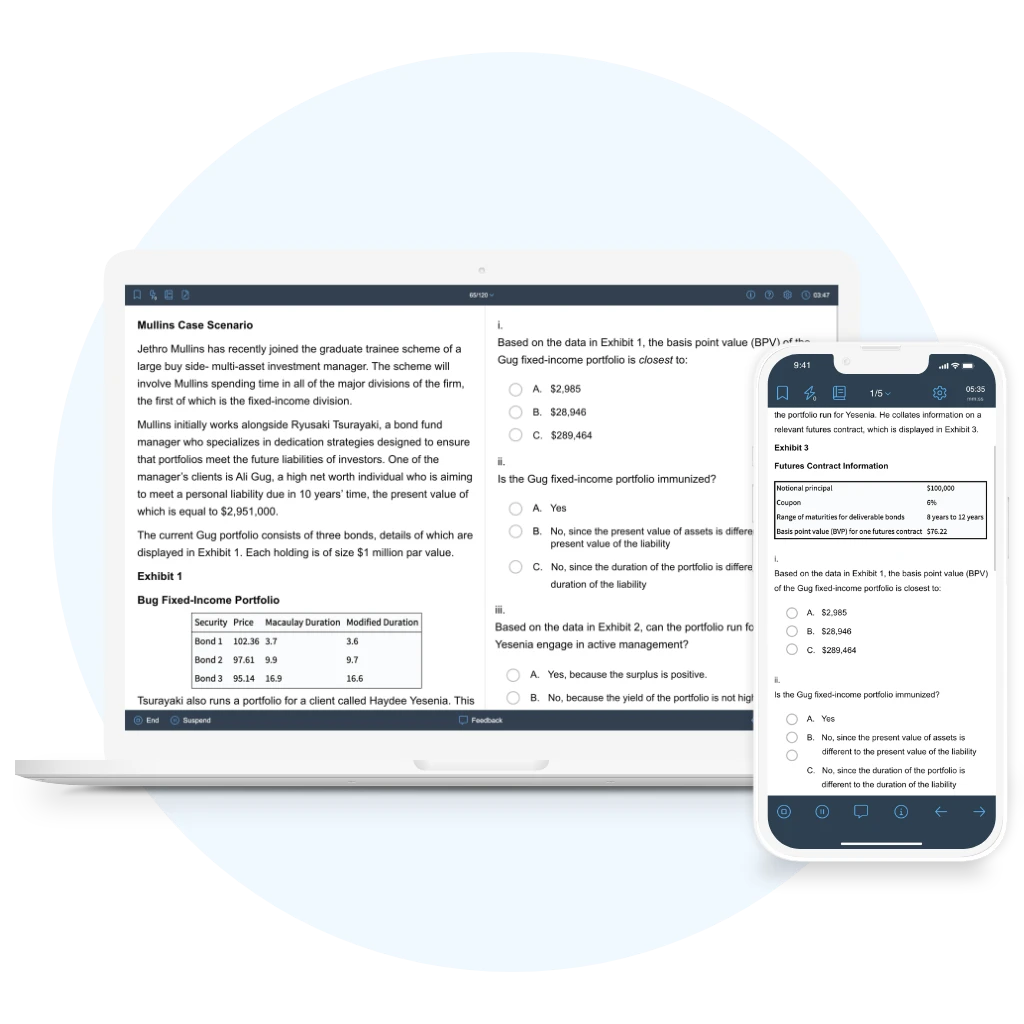
CFA Level 3 full-length mock exam with constructed response and item-set simulation.

4 Assess
Simulate the Full Exam Experience

Complete full-length mock exams as part of your CFA Level 3 exam prep, preparing for both the morning constructed-response session and the afternoon item-set session under realistic exam timing. These simulations replicate the CFA testing interface and help you refine time management, structure written responses efficiently, and defend portfolio recommendations under exam pressure.

Buy now
Smart Study Features

CFA Level 3 Prep Tools Built for Constructed Response Mastery

Refine judgment and structure written responses under exam conditions.

Hear From CFA® Level 3 Candidates Who Passed

CFA candidates worldwide have chosen UWorld for their Level 3 prep because every component of our CFA Level 3 course materials aligns to current LOS, teaches portfolio construction and justification while providing realistic essay grading expectations.

Your CFA® Level 3 Prep Journey Starts Here

Choose the CFA Level 3 prep course aligned to your timeline and complete your final level with confidence.

Level 3 ≠ MCQ

Why UWorld Leads CFA Level 3 Exam Prep

Level 3 tests portfolio management and constructed response. See how UWorld's specialized prep dominates where essay writing and strategy application matter most.

Constructed Response (Essay)

Guided essay frameworks, model answers, and step-by-step grading rubrics aligned to CFA Institute standards

Portfolio Management

IPS construction, strategic & tactical allocation, liability-driven investing with real-case scenario practice

Behavioral Finance

Behavioral biases, goals-based planning and tax efficiency tackled with case-study vignettes and applied Q&A

Ethics Applied at Level III

Ethics integrated into portfolio and advisory scenarios matching how the CFA Institute actually tests it at L3

AM + PM Session Balance

Dedicated prep for both the essay-based AM and item-set PM sessions

Alternative Investments

Institutional mandates, alternatives allocation, risk overlays all covered with real-world depth by industry practitioners

CFA® Level 3 Prep Course FAQs

ur CFA Level 3 review courses are designed around exactly what you need to practice and learn for structured judgment and portfolio-level decision-making.

Unlike shortcut-based programs or condensed CFA Level 3 crash course formats, our system emphasizes:

  • Constructed-response structure
  • IPS development frameworks
  • Portfolio integration across asset classes
  • Application of ethics in client contexts

UWorld’s CFA Level 3 course material is created and reviewed by our full-time CFA charterholders through a multi-layered quality control process that other prep providers cannot match.

Our singular focus on creating the highest quality CFA Level 3 review material ensures you get the most out of your test prep and truly reflects realistic grading standards rather than surface-level summaries.

UWorld covers all three CFA Level 3 specialized pathways: Portfolio Management Private Wealth Private Markets

For Portfolio Management, our prep covers IPS construction, strategic and tactical allocation, and liability-driven investing. For Private Wealth, we cover behavioral biases, goals-based planning, and tax efficiency through case-study vignettes. For Private Markets, we cover institutional mandates, alternatives allocation, and risk overlays. Every package also includes the full common core: Constructed Response mastery, Ethics, AM and PM session balance, and Alternative Investments.

The official curriculum is comprehensive but functions more as a reference for candidates than a preparation tool.

UWorld transforms dense curriculum content into structured CFA Level 3 study materials and optimized for application and execution.

Our CFA Level 3 Prep Course includes:

  • Guided video instruction
  • Essay-based portfolio case practice
  • Retention tools and analytics
  • A personalized study planner

In fact, we find that many Level 3 candidates combine the official curriculum with our structured CFA Level 3 study course for more focused preparation.

Our CFA Level 3 course includes a fully integrated system for portfolio construction and mastery of constructed-response questions. When you enroll in one of our CFA Level 3 courses you receive complete, exam-aligned resources including:

  • Expert-led video instruction covering every Learning Outcome Statement (LOS)
  • Digital and printed CFA Level 3 course materials
  • Structured essay practice built into your CFA Level 3 study material
  • Portfolio construction case drills
  • Full-length mock exams replicating both sessions
  • Smart flashcards and ReadyDecks
  • Personalized study planner
  • Advanced performance analytics

Every component of our CFA Level 3 exam material and CFA Level 3 exam materials undergoes:

  • Alignment verification with current CFA Institute standards
  • Multiple expert reviews by in-house CFA charterholders
  • Clarity refinement to eliminate ambiguity
  • Structured answer validation aligned with grading expectations

All CFA Level 3 materials are updated annually and accessible across devices.

The morning session for Level 3 exam day covers written responses requiring structured justification of portfolio decisions. Getting this section right sets the tone for the rest of the exam and effective CFA Level 3 prep must train you to:

  • Interpret client scenarios
  • Develop or revise Investment Policy Statements
  • Recommend asset allocation changes
  • Apply behavioral finance principles
  • Justify recommendations clearly

UWorld’s CFA Level 3 preparation course accomplishes just that by integrating essay drills directly into your prep to prepare you for grading expectations.

Yes. All qualifying CFA Level 3 prep courses include full-length mock exams.

These critical exam day simulations replicate:

  • Morning constructed-response format
  • Afternoon item-set format
  • Realistic topic weighting
  • Time constraints aligned with exam conditions

Practicing under full-session conditions strengthens your CFA Level 3 exam prep and improves execution and pacing for exam day.

Absolutely. UWorld’s in‑house charterholders update the question bank and study guides every year to reflect changes to the Learning Outcome Statements and exam format. 

Our content covers all core CFA Level 3 subjects including:

  • Asset Allocation
  • Portfolio Construction
  • Performance Measurement
  • Derivatives and Risk Management
  • Ethical and Professional Standards
  • Pathways (Portfolio Management or Private Markets or Private Wealth)

Video lectures are likewise updated annually to ensure you study the most accurate CFA Level 3 prep material for 2026 and beyond.

When you sign up for UWorld’s CFA Level 3 online course, your access begins on the purchase date and continues through the month following your scheduled exam window. 

We give candidates peace of mind that their CFA Level 3 prep course remains accessible across devices so you can continue practicing essay responses, reviewing portfolio frameworks, and completing mock exams until exam day. UWorld let’s you focus on concept mastery rather than subscription management.

The CFA Institute recommends approximately 300 hours of study and with so many hours and so many concepts to master, it can be challenging to plan appropriately.

UWorld brings structure to CFA Level 3 prep with our dynamic study planner which integrates within our CFA Level 3 prep course materials and our performance analytics to schedule time and units that focus on:

  • Essay practice sessions
  • Portfolio construction case synthesis
  • Full-session mock simulations

Use our dynamic study planner to efficiently setup and structure your preparation timeline around your busy schedule.

Yes. Every CFA Level 3 course includes our advanced analytics that monitor performance by topic and Learning Outcome Statement (LOS) to help you identify your weakest concept areas and ensure appropriate study and focus is given to improve them.

This tool is almost as important as the lessons themselves because it helps you optimize your CFA Level 3 review prep, and allocate study time strategically rather than covering concepts you’ve already mastered. From our experience, seeing your weak areas, focusing to improve them and seeing the results start to show in your dashboard helps to alleviate exam-day concern and build confidence.

Free resources are good for general study but they often lack structure, alignment, and verified accuracy.

Our professionally developed CFA Level 3 study materials are created through a highly multilayer quality control quality process that includes:

  • Curriculum alignment checks
  • Multiple expert reviews
  • Clarity validation
  • Structured answer testing

Investing in structured CFA Level 3 prep materials reduces inefficiency and protects your time investment.

Yes. UWorld’s mobile app allows you to practice QBank questions, review flashcards and watch video lessons anywhere. Progress syncs across devices, so your CFA Level 3 study materials remain consistent whether you study at home, work, or while commuting. 

We built our CFA Level 3 exam prep platform to be accessible anytime and anywhere you have the opportunity to study and our dynamic study planner makes it easy to arrange lessons and focus areas around your busy schedule.

Learn From Instructors Who Teach Portfolio Judgment

UWorld’s CFA Level 3 exam prep course is led by CFA charterholders who specialize in portfolio construction, wealth management frameworks, and constructed-response strategy. At Level 3, instruction is not about formulas. It is about structured decision-making, justification under constraints, and clear communication of recommendations.

Peter Olinto
Peter Olinto
JD, CFA, CPA (inactive)
20+ years teaching CFA® and CPA review. Trusted by 300+ universities and 100,000+ successful candidates worldwide.
Ryan O’Connell
Ryan O’Connell
CFA, FRM
Financial educator and modeler with UPenn & Texas A&M degrees. Creates CFA-focused content for 50K+ learners.
Andrew Kerai
Andrew Kerai
CFA
Experienced finance executive with leadership across asset management and corporate finance, driving growth and results.

Award-Winning Leader in Education Technology

UWorld has been recognized time and again as an innovator in education technology. We follow an iterative process of improvement based on student feedback and performance. UWorld’s accolades include making the GSV 150 list and earning honors like EY Entrepreneur of the Year and multiple EdTech Awards, highlighting our commitment to excellence.

GSV 150
Learn more
EY Entrepreneur of the Year
Learn more
EdTech Award
Learn more
Scroll to Top

See What Our Students Are Saying

CFA Level 3 Study Guide (Print + eBook)


$ 

Use code:  

Select your exam year

Continue to Cart
CFA Level 3 SimpleSheets


$ 

Select your exam date

Immediate access through Jun 30, 2026
Continue to Cart
CFA Level 3 Core


$ 

Select your exam date

Immediate access through Jun 30, 2025
Continue to Cart
CFA Level 3 Advanced


$ 

Select your exam date

Immediate access through Jun 30, 2026
Continue to Cart
CFA Level 3 Elite


$ 

Select your exam date

Immediate access through Jun 30, 2026
Continue to Cart
CFA Level 3 Mock Exam


$ 

Use code:  

Select your exam date

Portfolio Management
Private Markets
Private Wealth
Immediate access through Jun 30, 2026
Continue to Cart
CFA Level 3 SimpleSheets+
$29
Use code:
Select Your Exam Date
February 2025
Buy
August 2025
Buy

CFA Level 3 Product Feature Availability

Elite Advanced Core
Online Review Course Expert-led Videos Lectures Available Now
QBank Available Now
Formula Sheets (SimpleSheets+) Available Now
Flash cards (Ready Decks) Available Now
Mock Exams Available Now
Mobile App Available Now
Live Online Classes Virtual Live Classroom (August Exam) Available Now
Study Guide Print version August 2024
eBook version Available Now
Accelerate Bootcamp Live/Recorded Classes (August Exam) August 2024
Other FlexiPay Available Now
StudyPass Available Now
FreshStart Available Now

*The release date mentioned is tentative and subject to potential delays or modifications based on unforeseen circumstances during development. Features and specifications are based on the current understanding or available information, but they may be subject to revisions or refinements as the product undergoes further development.