What to Expect in CFA Level 1 Corporate Issuers?
The subject of Corporate Issuers, previously referred to as Corporate Finance, holds a relatively lower weight in the CFAI curriculum. Corporate Issuers serve as an initial exploration into corporate financing investments, constituting approximately 6-9% of Level 1 readings. Within this area, candidates will delve into the growing impact of environmental, social, and governance (ESG) factors on a company’s financial performance, the intricacies of capital allocation, and the evaluation of potential capital investment prospects.
Exam Weighting
The CFA Corporate Issuers topic has a weight of 6-9% of the CFA Level 1 exam, so approximately 11-16 of the 180 CFA Level 1 exam questions focus on this topic.
| Topic Weight | No. of Learning Modules | No. of Formulas | No. of Questions |
|---|---|---|---|
| 6-9% | 7 | ca. 40 | ca. 16 |
Level 1 Corporate Issuers Syllabus, Readings, and Changes
The CFA Level 1 Corporate Issuers curriculum includes 7 Learning Modules. Compared with the previous version of the curriculum, the updated structure places greater emphasis on working capital, capital allocation, and investment-related decision-making. The current Learning Modules reflect these refinements and present candidates with a clearer and more streamlined approach to understanding Corporate Issuers concepts.
| Corporate Issuers L1 Changes | |
|---|---|
| Organizational Forms, Corporate Issuer Features, and Ownership | Updated |
| Investors and Other Stakeholders | New |
| Corporate Governance: Conflicts, Mechanisms, Risks, and Benefits | Updated |
| Working Capital and Liquidity | New |
| Capital Investments and Capital Allocation | No Changes |
| Capital Structure | No Changes |
| Business Models | Major Revision |
Organizational Forms, Corporate Issuer Features, and Ownership
Candidates need to compare organizational forms, describe corporate issuer features, and differentiate between publicly and privately owned companies. This entails understanding various business structures, articulating key corporate issuer attributes, and recognizing the distinctions and implications of public versus private ownership.
The goal is to ensure a nuanced understanding of organizational forms, corporate issuers, and ownership dynamics in a concise manner.
Investors and Other Stakeholders
Candidates must compare the financial claims and motivations of lenders and shareholders, articulate a company’s stakeholder groups and compare their interests, and describe the environmental, social, and governance (ESG) factors considered by investors in evaluating corporate issuers.

Corporate Governance: Conflicts, Mechanisms, Risks, and Benefits
In this section, candidates are tasked with a comprehensive understanding of corporate governance, focusing on the principal-agent relationship, mechanisms for stakeholder management, and the risks and benefits associated with effective governance practices:
- Understand the intricacies of the principal-agent relationship and identify potential conflicts among stakeholder groups.
- Explore the concept of corporate governance, delving into the various mechanisms employed to manage stakeholder relationships and mitigate associated risks.
- Emphasize the significance of recognizing and addressing potential risks linked to poor corporate governance and stakeholder management, while highlighting the substantial benefits derived from effective governance practices and engaged stakeholder relationships.
Business models
This new learning module introduces various business models and explores their use in financial analysis. The material discusses how models can be used to
- Forecast profitability
- Describe the competitive environment
- Assess pricing pressures and cost margins
and generally recognize the forces at work in the firm’s environment and project how those forces will affect the firm’s potential risk and returns.
Capital Investment (formerly Uses of Capital)
- This reading covers how companies allocate capital assets and make investment decisions. Candidates will learn to draw connections between a company’s share price and its investment and value.
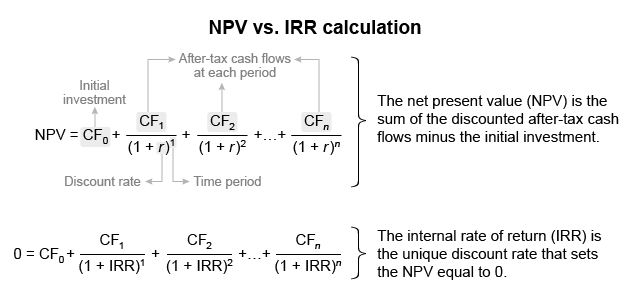
- The importance of net present value (NPV) valuation and internal rate of return (IRR) in capital allocation is a keystone of this reading and corporate finance in general. Candidates will encounter quite a bit of theory alongside technical calculations.
- This section provides candidates with the knowledge to avoid common capital allocation pitfalls in order to determine whether a project is economically viable.
Working Capital and Liquidity
- Candidates will explore the cash conversion cycle and compare issuers’ cash conversion cycles
- The readings explains liquidity and compares issuers’ liquidity levels
- Candidate will also learn issuers’ objectives and to compare methods for managing working capital and liquidity
Capital Investments and Capital Allocation
The focus of the topic is on understanding various types of capital investments, exploring the capital allocation process, including the calculation of net present value (NPV), internal rate of return (IRR), and return on invested capital (ROIC), and contrasting their applications in capital allocation. Additionally, the topic delves into the principles of capital allocation, highlighting common pitfalls. Furthermore, candidates are expected to describe types of real options relevant to capital investments.
Capital Structure
The particular combination of debt and equity a company uses to finance its operations, assets, and growth is referred to as its capital structure.
- Candidates will learn to describe changes in a company’s capital structure over time and important factors that influence capital structure decisions.
- The reading also covers how the company’s life cycle, the cost of capital, financing considerations, and competing stakeholder interests affect financing decisions.
CFA Corporate Issuers Level 1 Sample Questions and Answers
The sample questions are typical of the probing multiple-choice questions on the L1 exam. During the exam, you have about 90 seconds to read and answer each question, carefully designed to test knowledge from the CFA Curriculum. UWorld’s question bank is built to expose you to exam-like questions and illustrate and explain the concepts tested thoroughly.
What to Expect in CFA Level 2 Corporate Issuers?
CFA Level 2 Corporate Issuers, formerly known as Corporate Finance, remains one of the more lightly weighted CFA topics on the exam. 10% of Level 2 readings are dedicated to the topic. The readings dive deeper into the evaluation of capital budgeting projects, capital structure policy, dividend policy, corporate governance, and mergers and acquisitions.
Candidates will study the company decision processes related to investment projects, dividend policies, share repurchases, and M&A.
Exam Weighting
CFA Level 2 Corporate Issuers has a weight of 5-10% of the total exam content, such that approximately 6 of the 88 CFA Level 2 exam questions focus on this topic.
| Topic Weight | No. of Learning Modules | No. of Formulas | No. of Questions |
|---|---|---|---|
| 5-10% | 4 | ca. 40 | ca. 4-8 questions or 1-2 items sets |
Level 2 Corporate Issuers Syllabus, Readings, & Changes
The CFA Level 2 curriculum includes 45 total learning modules of which 4 (8% of the total curriculum) center on Corporate Issuers. The CFA Program curriculum’s changing approach to ESG moves away from treating it as a matter of internal corporate governance and instead places a strong emphasis on external analysis of the ESG practices of businesses. This development elevates CFA to the forefront of investment in the institute and its members. ESG is an important aspect of this way of thinking.
The Learning Modules are:
| Corporate Issuers (Formerly Corporate Finance) | |
|---|---|
| Analysis of Dividends and Share Repurchases | No change |
| Environmental, Social, and Governance (ESG) Considerations in Investment Analysis | Updates |
| Cost of Capital: Advanced Topics | Updates |
| Corporate Restructuring | No change |
Analysis of Dividends and Share Repurchases
This reading focuses on dividends on common shares paid by publicly traded companies. Companies offer dividends to shareholders as a return on their investment in a company’s equity, typically derived from a company’s net profits.
- Candidates will learn how various forms of dividends affect shareholders’ wealth and company financial ratios and valuation.
- This is understood through a comparison of different dividend policy theories and models, calculations, and analysis of broad trends in corporate payout policies.
Environmental, Social, and Governance (ESG) Considerations in Investment Analysis
Investors have become increasingly concerned with how a company is governed and its relationship to environmental and social issues. This reading explores the effects of ESG factors on a company’s bottom line by looking at investment risks and opportunities from an ESG perspective.
Furthermore, candidates will learn to distinguish between country-specific variations in ownership structures and their effects on governance policies and practices.
Cost of Capital: Advanced Topics
Picking up where the Level 1 curriculum leaves off, this new reading takes a deeper look into determining and/or estimating the costs of capital, including
- Factors that affect both top-down and bottom-up analytical models
- The costs of debt
- The different approaches to modeling the cost of equity
As always, the goal is to understand the effects of the cost of capital on firm value and investment returns.
Corporate Restructuring
This “new” learning module borrows material from the now-deleted reading on Mergers and Acquisitions, exploring more ways that a company can transform as it seeks to grow or shrink or become more efficient by absorbing the resources and capabilities of another, increasing its market power, or diversifying.
- This reading introduces candidates to the complexities and risks associated with mergers and acquisitions, as well as divestments such as spin-offs.
- Candidates will learn to explain common motivations for restructurings, contrast their various iterations, and compare the various financial advantages and disadvantages of each.
- The goal of the reading is to enable candidates to determine whether such a move would be a viable business strategy by understanding the costs, risks, and likelihood of a business restructuring actually coming to fruition.
CFA Corporate Issuers Level 2 Sample Questions and Answers
The sample questions here are typical of the L2 exam’s complexity and depth: formatted as item sets, with a vignette to deliver a scenario that tests the CFA L2 Curriculum. (On the actual exam, each vignette applies to four questions; we’ve thrown in a couple extra to get a bit more learning in). And be sure to review the illustrated explanations we’ve provided for each question: UWorld’s question bank is designed to expose you to exam-like questions and explain the concepts tested thoroughly.
Passage
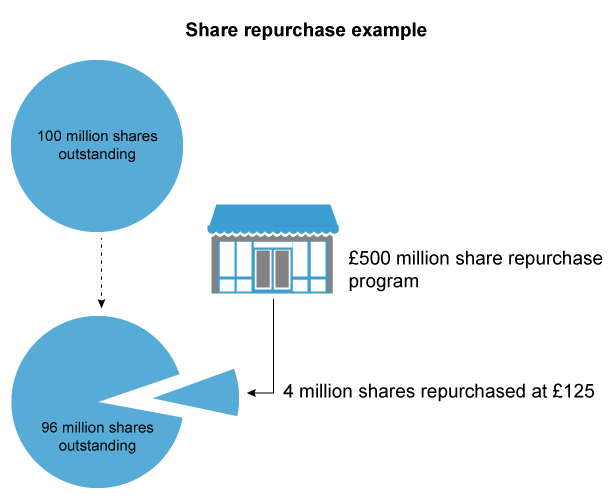
Compass Engineering’s board of directors is deciding between cash dividends or a share repurchase program as a method to begin returning cash to shareholders. Liam Fischer, a member of the board, states that both cash dividends and share repurchases have certain advantages that should be considered:
Advantage 1: Share repurchases tend to be more flexible. Although dividends can be raised, lowered, or suspended, they appear to create an expectation among investors that the distribution will continue in the future. Share repurchases do not seem to create the same expectation.
Advantage 2: If the tax rates for capital gains and dividends are the same, and the information coefficient is the same, then shareholders’ wealth will be greater with cash dividends since all shareholders receive cash.
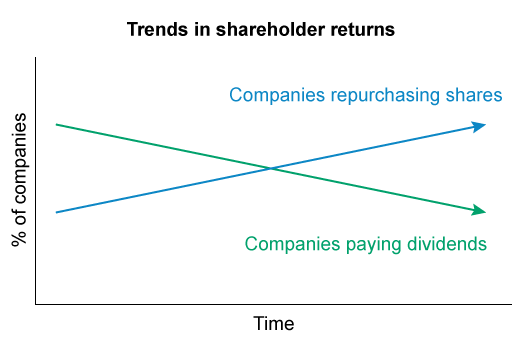
Alicia Wu, the chairman of the board, indicates that Compass should review the long-term trends in the country (the United Kingdom) before deciding.
After deliberation, the board favors a share repurchase program. Jessica King, another member of the board, is concerned about the effect of share repurchases on Compass’ EPS. She collects the following data for 20X2:
| Exhibit 1 Compass’ Financial and Market Information for Proposed Share Repurchases | |
|---|---|
| Net income (Millions) | £650 |
| Cash on hand (Millions) | £500 |
| Shares outstanding (Millions) | 100 |
| Current share price | £115 |
| Expected purchase price | £125 |
| Pretax cost of debt | 6% |
| Tax rate | 20% |
In addition, King wonders what effect share repurchases have on companies’ book values. She gathers data from three of Compass’ peers who have made a share repurchase:
| Exhibit 2 Financial Information on Compass’ Peers | ||||
|---|---|---|---|---|
| Peer 1 | Peer 2 | Peer 3 | ||
| Net income | 150 | 300 | 350 | |
| Book value of equity | 3,000 | 5,000 | 6,500 | |
| Shares outstanding | 500 | 600 | 650 | |
| Value of shares repurchased | 90 | 80 | 310 | |
| Number of shares repurchased | 15 | 10 | 30 | |
| After-tax cost of debt | 5.5% | 6.0% | 5.0% | |
The board members then discuss the best approach for Compass to repurchase shares. King has identified two possible scenarios, both using the same amount to repurchase shares:
Scenario 1: Purchase shares using all cash on hand.
Scenario 2: Purchase shares with funds from an issuance of debt.
Wu states that her preference is to choose a method by which the company can control the process and execute it quickly. She also prefers a process that would allow Compass to discover the minimum price at which it can repurchase the desired number of shares.



What to Expect in CFA Level 3 Corporate Issuers?
In CFA Institute’s Level 3 curriculum, Corporate Issuers do not exist as a separate topic, but its foundational ideas are tested implicitly, with a focus on Portfolio Management.